


At 2:17 a.m., a nurse watches three screens at once. One shows a patient monitor. One shows a medication queue. The third has a portal message from a worried daughter who wants to know why her father sounds confused.
For healthcare product budgeting and scope, read our healthcare app development cost guide.
That is where healthcare software innovation appears to be heading: less theater, more useful help at the exact moment someone needs it. This refreshed guide looks at how innovations in medical software are changing healthcare, what feels real now, and what still needs a careful human hand.
Quick Summary / Key Takeaways
-
Healthcare software is shifting from record keeping to real-time support for patients, clinicians, and operations teams.
-
AI can help with triage, documentation, imaging review, care gaps, and admin work, but it still needs clean data, clinical review, and clear limits.
-
The future of health informatics is not just more data. It is better context, better access, and fewer places where information gets trapped.
-
Telemedicine, remote patient monitoring, patient portals, EHR upgrades, and secure AI assistants will likely shape the next wave of care.
-
The safest software bets are the ones that reduce friction inside existing clinical work, not the ones that look impressive in a sales demo.
The Hallway Usually Tells the Truth
Healthcare does not break only inside operating rooms or emergency departments. It breaks in small delays.
A lab result waits in the wrong inbox. A patient repeats the same history to three people. A specialist cannot see a note from last week. A nurse loses ten minutes switching between systems that were never designed to talk.
Small delays become care delays. Then the phones start ringing.
In our work around healthcare software conversations, the first useful question is rarely, “Can we add AI?” The better question is usually quieter: “Where does the care team lose time, context, or trust?”
That question changes the whole product roadmap.
If you are exploring Deuex healthcare software development services, this is the place to begin. Not with a feature list. With the moment the workflow starts to wobble.
What Healthcare Software Innovation Really Means

Healthcare software innovation is the use of new digital systems, AI, connected records, patient tools, and secure workflows to improve how care is delivered and managed.
That sounds tidy. Real life is messier.
A doctor may want fewer clicks. A patient may want one clear answer. A compliance officer may want audit trails. A CFO may want fewer claim denials. A product leader may want something that can grow without turning into a maintenance headache six months later.
The future of healthcare software sits somewhere in the middle of all that tension.
And that is why the best medical software does not feel loud. It feels like a burden has been removed.
Table 1: Where Medical Software Is Changing Care
Software Is Changing Healthcare, But Not in the Way People First Imagined
For years, the pitch sounded almost too clean: software would digitize healthcare, and everything would become faster.
That was only half right.
Digitizing a broken workflow can make the broken part move faster. A messy intake process becomes a messy online intake process. A confusing referral loop becomes a confusing portal notification. The pain changes shape, but it does not disappear.
The newer wave appears more useful because it is starting to focus on context.
Can the system know which patient needs a call today?
Can it warn the care team before a gap becomes an emergency?
Can it pull the right clinical history without asking the patient to remember every medication at the front desk?
Can it help a nurse make sense of thirty readings instead of adding thirty more alerts?
That is the difference.
The Research Points to a More Human Kind of Software
Two pieces of research are worth keeping close.
In Machine Learning in Medicine, Alvin Rajkomar, Jeffrey Dean, and Isaac Kohane describe a future where patient care can be supported by patterns found across large sets of medical data. The useful lesson is not “machines replace clinicians.” It is more grounded than that. Better software may help clinicians see the next clue sooner, as long as the data is high quality and the workflow is built with care.
Eric Topol makes a related case in High-performance medicine. His argument suggests that AI becomes most valuable when it pairs machine pattern recognition with human judgment, empathy, and clinical responsibility.
That idea matters because healthcare is not a spreadsheet with symptoms in one column and answers in another.
People are frightened. They forget details. They skip medication because the side effects feel worse than the diagnosis. They avoid appointments because transportation is hard. Software can help, but only when it respects the human mess inside the system.
Where AI Fits, And Where It Should Slow Down

AI in healthcare will likely keep growing in four practical areas.
First, it can help sort information. That includes patient messages, intake forms, lab trends, claims notes, and imaging queues.
Second, it can help spot patterns. A rising blood pressure trend. A diabetes patient who has not scheduled a retinal exam. A possible sepsis signal. A missed follow-up after discharge.
Third, it can reduce documentation drag. Anyone who has watched a clinician finish notes after a long shift knows why this matters.
Fourth, it can support patient communication. A well-designed assistant can answer basic questions, collect pre-visit details, and guide patients to the right next step.
There is a line, though.
AI should not become a black box that tells a clinician what to do without showing enough reason to trust or challenge it. It should not guess when a regulated workflow requires certainty. It should not turn sensitive health data into a training playground.
For teams planning conversational tools, Deuex AI chatbot integration services can be useful when the use case is narrow, controlled, and tied to real patient or staff needs.
Table 2: Healthcare Software Solutions Often Praised for Advanced Product Features in the United States
The Future of Health Informatics Is About Movement, Not Storage
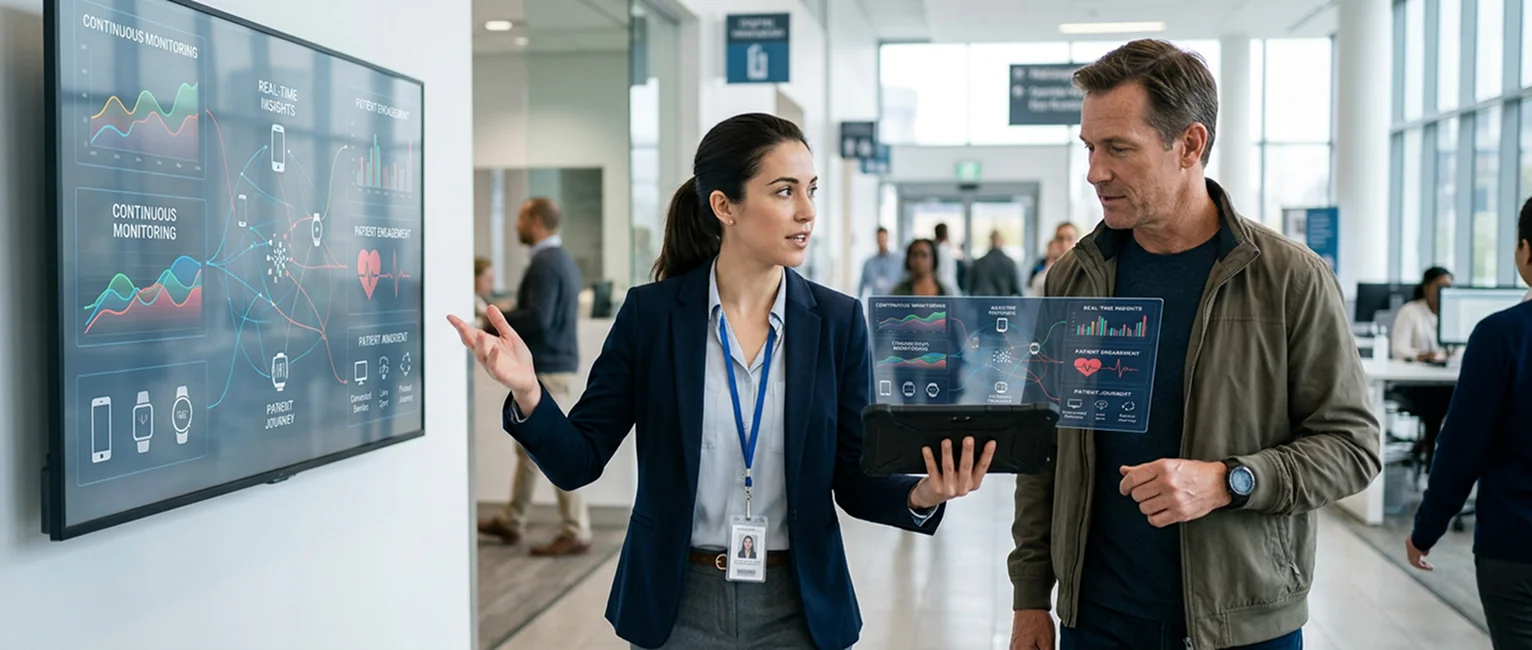
Health informatics used to sound like a records problem. Store the data. Organize the data. Retrieve the data.
Now it appears to be a movement problem.
Can the right data move to the right person at the right time, without creating privacy risk or extra work? That is the question.
This is why APIs, interoperability, consent management, audit logs, and data quality are becoming part of the product conversation earlier. The ONC API and information blocking guidance is useful here because it shows how access to health information is not only a technical issue. Behavior, contracts, and business rules can block progress too.
For healthcare teams, the future of informatics may depend less on buying one giant system and more on making sure the systems already in place can speak clearly.
A Realistic Example: The Follow-Up That Does Not Fall Through
Picture a cardiology clinic after a busy Thursday.
A patient leaves with new medication instructions. The doctor wants a blood pressure check in ten days. The nurse wants to confirm the patient understood the dose. The billing team needs the visit coded properly. The patient’s daughter wants updates because she helps manage care from another state.
Without connected software, that follow-up can scatter.
With a better workflow, the system can trigger a reminder, collect home readings, flag a risky trend, route a question to the nurse, and keep the patient-facing message readable.
Nothing flashy.
That is the point.
The outcome is not “we launched a new platform.” The outcome is that the patient does not vanish between appointments.
The Quiet Risks No One Should Ignore
Healthcare software carries real risk because the stakes are personal.
A broken shopping cart is annoying. A broken medication workflow is something else entirely.
The main risks tend to show up in plain places:
-
Data quality: Old, duplicated, missing, or mismatched records can weaken even a smart system.
-
Security: Health data needs strong access control, encryption, monitoring, and response plans.
-
Compliance: HIPAA, consent, retention, and audit expectations should shape the build from the start.
-
Workflow fit: If staff need five extra clicks to get value, adoption may fade.
-
Model drift: AI behavior can change as data, patient populations, or clinical patterns change.
-
Accountability: Someone must know who reviews, approves, overrides, and documents decisions.
The FDA AI-Enabled Medical Devices list is a useful reminder that AI in clinical settings is not just a product feature. In some cases, it becomes regulated medical software. That distinction needs legal, clinical, and technical review before launch.
If privacy and compliance are part of the roadmap, the HIPAA compliant software development guide is a sensible internal next read.
What Healthcare Teams Should Build First

A good healthcare software roadmap does not begin with every possible feature. It begins with the constraint that hurts most.
Maybe that is patient intake.
Maybe referrals.
Maybe billing rework.
Maybe care gap tracking.
Maybe a telemedicine workflow that works well until the follow-up begins.
When we review healthcare product ideas, we usually look for three signs before recommending a build.
One, the workflow happens often enough to matter.
Two, the pain is clear enough to measure.
Three, the software can help without asking clinicians to become system administrators.
That last part is easy to underestimate.
Clinicians are not waiting for another dashboard. They are waiting for a system that respects their day.
How to Build Without Creating More Work
Start small, but not carelessly.
A narrow product can still be serious. In fact, it often should be. Pick one patient journey, one staff workflow, or one operational bottleneck. Then map the real steps, not the steps on the slide deck.
Ask these questions before writing code:
-
Who touches this workflow today?
-
Where does information get copied by hand?
-
Which delay creates the most downstream pain?
-
What data is needed, and where does it live?
-
What should the software never decide on its own?
-
What needs to be logged for compliance and trust?
-
What outcome will prove the work mattered?
This is where Deuex DevSecOps services can support the less glamorous side of the work: secure releases, monitoring, access control, and faster fixes when something changes.
The best future-facing healthcare software will not be the one with the longest feature menu. It will be the one people keep using after the first week.
Ready to Build Healthcare Software People Will Actually Use?
If your healthcare team is planning a new product, EHR workflow, telemedicine system, patient portal, AI assistant, or remote monitoring tool, start with the real care journey. The software should make that journey clearer, safer, and easier to manage.
Ready to Build Healthcare Software People Will Actually Use?
If your healthcare team is planning a new product, EHR workflow, telemedicine system, patient portal, AI assistant, or remote monitoring tool, start with the real care journey. The software should make that journey clearer, safer, and easier to manage.
Talk to Deuex Solutions about building healthcare software that fits the way your team works and the way your patients live.
Related reading


Sanket Shah
CEO & Founder
I am Sanket Shah, founder and CEO of Deuex Solutions, where I focus on building scalable web mobile and data driven software products with a background in software development. I enjoy turning ideas into reliable digital solutions and working with teams to solve real world problems through technology.


