Quick Summary / Key Takeaways
For local delivery support, explore Deuex Solutions' software development services in Dubai for UAE-based planning, implementation, and long-term support.
-
AI agents UAE businesses deploy in 2026 are moving beyond chat interfaces. They can monitor events, retrieve information, use business tools, prepare decisions, and take approved actions across software systems.
-
A chatbot mostly answers. An agent can work toward an objective.
-
The strongest business cases are usually repetitive, multi-step workflows such as procurement, sales follow-up, invoice processing, IT support, operations, customer service, and compliance preparation.
-
Dubai launched a two-year initiative in May 2026 to support private-sector adoption of Agentic AI. In September, Dubai Chambers introduced specialized training for more than 14,000 member companies.
-
The UAE Government has also announced plans to transition 50% of government sectors, services, and operations toward Agentic AI models within two years.
-
Do not begin with full autonomy. Start with read, summarize, recommend, draft, request approval, then act within narrow limits.
-
Deloitte's August 2026 research found that only 5% of surveyed organizations considered their business processes highly prepared for AI agents, while just 15% had scaled orchestrated multi-agent adoption across functions.
-
Agent reliability still deserves caution. Recent research suggests better benchmark scores do not automatically translate into predictable performance in real workflows.
-
Data quality, APIs, permissions, audit logs, monitoring, and human approval are often more important than the model itself.
-
Measure business outcomes such as processing time, error rate, work completed without re-entry, human review time, and cost per completed task.
-
The safest question is not, "What can the agent do?" It is, "What should it be allowed to do without asking us?"
At 9:14 on a Tuesday morning, the procurement manager received a purchase-order approval request.
Nothing unusual there.
Except nobody on her team had created the order.
The system had.
An AI assistant had read an approved stock-replenishment request, checked inventory, reviewed three supplier quotations, compared delivery dates, looked up the company's preferred-vendor rules, prepared a purchase order, and sent it to the manager for approval.
She stared at the screen for several seconds.
Then she called IT.
"Did the chatbot just buy something?"
Not quite.
It had not placed the order.
But it had done almost everything leading up to that decision.
That distinction is where the conversation around AI agents in the UAE gets interesting.
Businesses have spent the last few years asking AI questions.
The next phase is about deciding what AI can do.
For organizations exploring practical agentic systems, Deuex Solutions' AI development capabilities cover AI-backed applications, enterprise assistants, workflow agents, data systems, and software connected to real business processes.
First, What Is an AI Agent?

An AI agent is software that can work toward a defined goal by gathering information, reasoning about what to do next, using approved tools, and taking or proposing actions.
That is different from a chatbot.
A chatbot may answer:
"Which supplier offers the lowest price?"
An agent might:
-
Retrieve approved supplier quotes
-
Compare price and delivery dates
-
Check stock requirements
-
Review purchasing rules
-
Identify the preferred option
-
Draft the purchase order
-
Route it to the correct person
-
Record the decision after approval
The conversation is only one small part.
The work happens behind it.
Chatbot vs Copilot vs AI Agent
These terms are often mixed together.
A practical distinction looks like this:
Rule-based automation remains useful.
Not every process needs an agent.
If the rule is simply "send this email three days before renewal," ordinary automation is cheaper and easier to understand.
Agentic systems become interesting when the process contains judgment, changing information, several tools, or different possible next steps.
Why Are AI Agents Suddenly Relevant to UAE Businesses?
The local direction has changed quickly.
On April 23, 2026, the UAE announced a government framework aimed at moving 50% of government sectors, services, and operations toward Agentic AI within two years. The government described these systems as capable of monitoring changes, analyzing information, making recommendations, managing operations, and running sequences of actions.
Then the private-sector push followed.
On May 4, Dubai launched a two-year program to accelerate Agentic AI adoption among private companies, including training, incubators, and support for companies building agentic technology.
By September 1, Dubai Chambers had introduced specialized training intended to reach more than 14,000 member companies through its Business Groups and Business Councils.
This does not mean every UAE company needs autonomous agents immediately.
It means the conversation has moved.
The question is no longer whether generative AI can write an email.
The question is where it can safely participate in operating the business.
The Procurement Manager Asked the Right Question
She did not ask:
"How intelligent is this model?"
She asked:
"What exactly was it allowed to do?"
That is the better question.
The pilot agent could:
-
Read approved inventory requests
-
Access supplier records
-
Compare quotes
-
Retrieve purchasing policies
-
Draft a purchase order
-
Recommend a supplier
-
Route the request for approval
It could not:
-
Add a new supplier
-
Change banking details
-
Approve its own recommendation
-
Submit an order above AED 10,000
-
Override the finance department
-
Modify purchasing policy
Suddenly, the system seemed less mysterious.
It had a job description.
Businesses need to give agents something similar.
What Does an Enterprise AI Agent Need Behind the Screen?

An agent does not become useful because it has access to a powerful model.
It needs business context.
A typical setup might look like this:
Business Event → AI Agent → Approved Context (CRM | ERP | Documents | Policies | Database) → Decision Rules and Permissions → Tools and APIs → Human Approval (If Required) → Action → Audit Log + Monitoring
Every layer matters.
If customer information is wrong, the recommendation may be wrong.
If permissions are too broad, a reasonable mistake can become a costly action.
If APIs are unreliable, the agent may believe something happened when it did not.
If logging is weak, nobody can reconstruct the decision afterward.
The model is one component.
The surrounding system turns it into a business tool.
Practical AI Agent Use Case 1: Procurement
Procurement fits agentic systems surprisingly well because the work often involves many small decisions.
An agent might:
-
Monitor stock requirements
-
Retrieve approved suppliers
-
Request or collect quotations
-
Compare pricing
-
Check delivery lead times
-
Review vendor history
-
Flag unusual price changes
-
Draft purchase orders
-
Route approvals
-
Follow up on late confirmation
-
Update procurement records
The UAE Government itself launched a Procurement AI Agent in May 2026 as part of its first cohort of specialized agentic systems. The system was described as supporting procurement teams and sourcing workflows. Other launched systems covered tax auditing, customer service, and technical support.
For a private business, the important part is not copying the government model.
It is identifying where human judgment belongs.
An AI system may compare quotes.
A procurement manager may still approve the supplier.
That boundary can move later, once evidence builds.
Use Case 2: Finance Operations Without Giving AI the Bank Account
Finance is attractive because repetitive work is everywhere.
It is also an area where autonomy should be introduced carefully.
A finance agent could help with:
-
Matching invoices to purchase orders
-
Checking whether goods were received
-
Identifying missing invoice information
-
Categorizing expenses
-
Preparing reconciliation exceptions
-
Following up on overdue receivables
-
Summarizing unusual account movements
-
Collecting documents for month-end work
-
Preparing cash-flow explanations
Consider an overdue invoice.
A normal automation might send the same reminder on day 30.
An agent could first check:
-
Was the invoice delivered?
-
Did the customer dispute it?
-
Is there an open support issue?
-
Has the customer partly paid?
-
Who owns the account?
-
What happened during the last collection attempt?
It can then draft a response suited to the situation.
That is much more useful.
Would we allow the same system to change customer banking details or authorize payments?
Probably not at the beginning.
The closer the action gets to irreversible financial movement, the tighter the approval rule should become.
Use Case 3: Sales Agents That Work Before the Meeting
Many sales teams do not lack information.
They lack time to assemble it.
A sales agent can prepare an account before a salesperson opens the CRM.
It might:
-
Review account history
-
Summarize open opportunities
-
Find unresolved support issues
-
Retrieve past proposals
-
Check recent interactions
-
Identify missing decision makers
-
Research public company updates
-
Draft meeting questions
-
Prepare follow-up notes
-
Suggest CRM updates
That saves a salesperson from spending twenty minutes clicking between systems.
The opportunity is larger when the agent can interact with workflow.
After a call, it may draft the follow-up, prepare CRM changes, create an internal task, and remind the salesperson about an agreed deadline.
Still, keep a distinction between helping sell and speaking for the company without review.
Sending an ordinary follow-up may eventually be safe.
Changing commercial terms is another matter.
Use Case 4: Customer Service That Can Actually Resolve Something
Most support chatbots have one obvious weakness.
They can talk.
They cannot fix much.
A useful service agent should be able to complete permitted transactions.
For example:
Customer: "My delivery is late."
The system could:
-
Identify the customer
-
Retrieve the order
-
Check courier status
-
Review expected delivery
-
Determine whether the delay qualifies for action
-
Offer an approved option
-
Reschedule delivery
-
Record the interaction
That is different from replying:
"I am sorry to hear your delivery is delayed."
Deloitte's 2026 research gives a real example of an airline using AI agents to support common customer transactions such as rebooking flights and rerouting baggage, leaving human teams to focus on harder cases.
This is where customer-facing agents become valuable.
Not when they sound human.
When they can complete the job.
Use Case 5: Operations and Logistics
Operations teams spend large amounts of time responding to exceptions.
A delivery is late.
A machine reports a fault.
A warehouse location is short of stock.
A scheduled job has no technician.
Agentic systems can monitor those signals and coordinate the first response.
An operations agent might:
-
Watch stock thresholds
-
Identify likely shortages
-
Open replenishment tasks
-
Compare alternative fulfillment locations
-
Assign routine work
-
Create maintenance tickets
-
Summarize shift exceptions
-
Prepare handover notes
-
Escalate unusual delays
-
Check whether dependent tasks are complete
The strongest use case is rarely "let AI run the warehouse."
It is often much narrower:
Let AI handle the first ten minutes after an exception appears.
Gather the facts.
Check the rules.
Prepare the options.
Then involve a person where the decision carries real cost.
Use Case 6: IT Service Agents
IT teams repeatedly answer the same categories of requests.
Password access.
Software permissions.
Laptop issues.
Account provisioning.
Service status.
An agent could read a support ticket, check device information, inspect previous incidents, identify the likely cause, run approved diagnostics, prepare a fix, and close low-risk cases.
The UAE Government's initial agent rollout included a Technical Support AI Agent designed to support IT services and technical teams.
For businesses, this can work particularly well when procedures already exist.
An agent should not invent the access policy.
It should follow one.
For example:
New employee requests access to finance software.
The system checks role.
Checks manager approval.
Checks policy.
Then provisions the correct access.
That is much safer than allowing a general-purpose agent to decide who deserves finance permissions.
Use Case 7: Compliance and Document Review
There is an enormous amount of administrative work between "we comply" and actual evidence.
Agentic systems can help organize that work.
They may:
-
Check whether required documents are present
-
Compare submissions with policy
-
Flag expired documents
-
Identify missing signatures
-
Prepare audit evidence
-
Monitor review dates
-
Summarize regulatory updates for human review
-
Route exceptions
-
Record decisions
A tax audit agent was among the first specialized systems introduced by the UAE Government in May 2026. It was designed to support data verification and tax review processes.
The key word is support.
A business should be careful about allowing a probabilistic model to become the final authority on legal or regulatory interpretation.
Agents can collect.
Compare.
Flag.
Explain.
The accountable person still needs to own the decision.
What Should an Agent Be Allowed to Do?
A useful rollout model is to increase authority gradually.
Most businesses do not need Level 7.
Many of the best ROI cases sit between Levels 3 and 6.
This also makes adoption easier for employees.
People can inspect recommendations before trusting actions.
Trust grows from evidence.
Not from launch-day enthusiasm.
Why Is Human Oversight Still Important?

Because capable and dependable are not identical.
Researchers Stephan Rabanser, Sayash Kapoor, Peter Kirgis, Arvind Narayanan and colleagues examined 14 agentic models across two benchmarks in their 2026 study on AI agent reliability.
Their work found that gains in task capability had produced only relatively small improvements in broader reliability characteristics such as consistency, robustness, predictability, and safety.
That is an important distinction for business buyers.
Suppose an agent completes an invoice workflow correctly nine times.
Then fails strangely on the tenth.
An accuracy percentage does not tell you:
-
How severe the failure was
-
Whether the same input would produce the same result again
-
Whether the agent recognized uncertainty
-
Whether a person could catch the error
-
Whether the system failed safely
Enterprise deployment needs those answers.
A Newer Research Question: How Much Oversight Does the Agent Need?
A September 2026 research preprint by Veronica Chatrath, Bryan Zhu, Jingxuan Fan and colleagues proposes a framework called READY, short for Reliable Enterprise Agent Deployment.
The idea is useful even outside the paper.
Instead of asking only whether an agent can complete a task, READY evaluates a combination of workflow reliability, human oversight, and operating cost. It then looks for the least costly oversight policy capable of meeting a defined reliability target.
That is a much better business framing.
The goal should not necessarily be zero human involvement.
Perhaps a system can process 70% of straightforward cases independently while routing 30% to people.
If that produces dependable outcomes at reasonable cost, the hybrid design may be better than chasing complete autonomy.
Enterprise Adoption Is Growing, but Readiness Is Behind
The market is moving quickly.
McKinsey's August 2026 global AI survey found that 40% of respondents from organizations with more than $1 billion in annual revenue reported scaling AI agents, compared with 22% among smaller organizations.
Yet business processes appear less ready than technology spending might suggest.
Deloitte's August 2026 research found that only 5% of surveyed organizations described their processes as highly prepared for agents. Only 15% said they had scaled orchestrated, cross-functional multi-agent use. At the same time, 75% agreed that collaboration between humans and AI agents creates more value than automation alone.
There is a useful message buried in those numbers.
Buying agents is easier than redesigning work around them.
Why Data Often Stops AI Automation in Dubai Before the Model Does
Imagine asking an agent:
"Which customer orders are at risk today?"
The answer depends on:
-
Correct customer records
-
Current stock
-
Warehouse status
-
Supplier data
-
Delivery information
-
Payment status
-
CRM ownership
-
Clear definitions of "at risk"
If these systems disagree, the agent has a bigger problem than reasoning.
McKinsey reported in April 2026 that nearly two-thirds of enterprises had experimented with agents, while fewer than 10% had scaled them to produce tangible value. The firm cited data limitations as a common barrier, with eight in ten companies reporting data constraints affecting scale.
This is why enterprise AI projects often begin somewhere unexpected.
Not with prompts.
With customer IDs.
APIs.
Permissions.
Process definitions.
Document quality.
If you need to build those foundations first, that is not a delay to the AI project.
That is the AI project.
What About UAE Data Privacy?
Agents may touch sensitive information because useful business workflows involve real customers, employees, transactions, and internal records.
The UAE's Personal Data Protection Law establishes requirements around processing personal data, confidentiality, privacy, and the responsibilities of organizations handling that information.
Before connecting an agent to business data, understand:
-
Which data it can retrieve
-
Which records it can modify
-
Whether prompts leave your controlled environment
-
Which model providers receive information
-
Where records and logs are stored
-
Whether data is retained
-
Who can inspect agent actions
-
How permissions are revoked
-
Which actions require human approval
Do not give an agent access because "the employee already has access."
Machine access behaves differently.
A person may open five customer records.
A system can open fifty thousand.
Permissions must reflect that difference.
Why Agent Authorization Needs Its Own Design
The World Economic Forum's May 2026 playbook for enterprise AI agents focuses heavily on authorization.
Its reasoning is straightforward.
An agent needs defined authority over:
-
Information
-
Tools
-
Actions
-
Financial limits
-
Business areas
-
Time periods
-
Escalation conditions
The report proposes an Agent Capability and Authorization Profile to make delegated authority explicit and auditable.
You do not need to adopt that specific framework.
You should adopt the mindset.
For every agent, write down:
Can read:
Customer orders, stock, supplier records.
Can draft:
Purchase orders below AED 50,000.
Can execute:
Nothing without approval.
Cannot access:
Employee payroll, supplier banking changes.
Must escalate:
New vendor, unusual price change, amount above threshold.
Now you have something that can be reviewed.
What Does a 90-Day Agent Pilot Look Like?
Do not begin with ten agents.
Choose one workflow.
The first pilot should have:
-
Meaningful business volume
-
Clear expected outcomes
-
Reversible actions
-
Accessible data
-
A human owner
-
Enough historical examples for testing
Avoid starting with an obscure process nobody cares about.
You will prove that the technology works while learning nothing about business value.
How Should You Measure ROI?
Do not count conversations.
Count work.
Useful measures include:
-
Minutes saved per case
-
Cases completed per employee
-
Human review time
-
Error rate
-
Escalation rate
-
Cost per completed workflow
-
Customer response time
-
Manual re-entry removed
-
Backlog reduction
-
Revenue recovered
-
Time from request to decision
-
Percentage of agent recommendations accepted
-
Percentage of actions reversed by humans
Then measure failures.
That part is easy to forget.
Track:
-
Incorrect actions
-
Unnecessary escalation
-
Unauthorized tool attempts
-
Data retrieval failures
-
Duplicate actions
-
Hallucinated information
-
Human overrides
An agent saving 500 hours while creating two serious payment errors may not be a good investment.
Business value and error severity belong in the same calculation.
What Should UAE Businesses Avoid Automating First?
Some decisions are poor early candidates.
Be cautious with:
-
Large payments
-
Employee termination
-
Legal commitments
-
Final regulatory decisions
-
High-value lending
-
Unrestricted refunds
-
Changes to supplier banking information
-
Security permissions
-
Safety-critical equipment control
-
Destructive infrastructure actions
AI can still assist these workflows.
Let it collect evidence.
Summarize history.
Check completeness.
Prepare options.
Then stop.
The point is not to remove humans from every process.
It is to remove humans from the parts where human attention adds very little.
The Procurement Agent Never Became the Buyer

Three months after the purchase-order incident, the company's agent was processing far more work.
It checked stock signals.
Compared supplier quotes.
Prepared routine purchase orders.
Followed up on missing confirmations.
Flagged price changes.
Updated records after approved orders were placed.
But it still could not approve a major purchase.
The procurement manager could.
That did not make the project less successful.
It made the division of work clearer.
The agent handled the search, collection, checking, preparation, and chasing.
The manager handled accountability.
And the company discovered something else.
The biggest time saving did not come from replacing a person.
It came from removing the invisible fifteen-minute gaps between systems.
That is where many enterprise AI UAE opportunities are likely to sit.
Between the CRM and ERP.
Between the invoice and purchase order.
Between the customer request and the internal team capable of resolving it.
Between a problem appearing and somebody finally noticing.
Move Beyond the Chat Window
The next useful AI project may not need another chatbot.
It may need a worker that quietly checks inventory each morning.
A finance assistant that investigates invoice exceptions before somebody opens Excel.
A service agent that can reschedule a delivery instead of apologizing for it.
An IT system that resolves routine requests while engineers focus on the ones that require real judgment.
That is where AI automation in Dubai becomes interesting.
Not when AI talks more.
When the business does less repetitive work.
At Deuex Solutions, we help companies design AI systems around real workflows, connect them with existing software, build the required data and API layers, and introduce human controls where actions carry risk.
If your company is exploring generative AI UAE use cases and wants to move from answering questions to completing work, contact Deuex Solutions to discuss where an agent could fit safely into your operation.
The best AI agent is not the one allowed to do everything. It is the one trusted to do the right amount of work without creating a bigger problem.
Related reading
-
AI in Software Development: Business Use Cases That Actually Matter
-
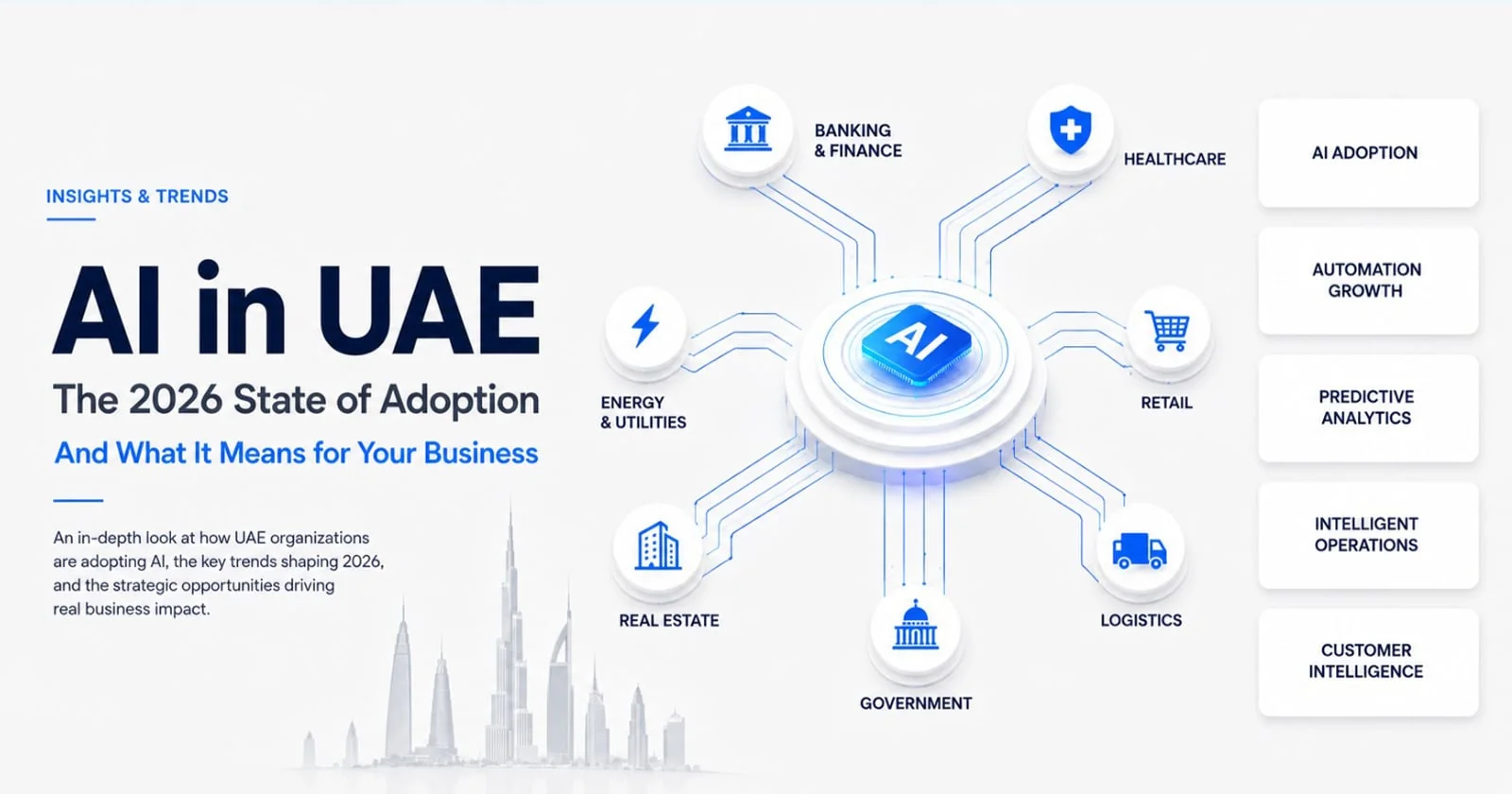
AI in UAE: The 2026 State of Adoption and What It Means for Your Business
-
UAE Data Protection Law (PDPL): A Practical Guide for Companies Building Software
Primary Sources


Sanket Shah
CEO & Founder
I am Sanket Shah, founder and CEO of Deuex Solutions, where I focus on building scalable web mobile and data driven software products with a background in software development. I enjoy turning ideas into reliable digital solutions and working with teams to solve real world problems through technology.