The question used to be simple: “Can we build this web product faster and cheaper offshore?”
The strongest outsourcing decisions start with clear ownership, delivery standards and business outcomes. Our web application development in India team supports product discovery, engineering, quality and long term improvement.
In 2026, that question feels outdated.
CIOs and CTOs are now staring at a different set of pressures-AI-assisted delivery cycles, security-by-default expectations, talent shortages in niche stacks, and boards that want predictable outcomes. It’s no longer “outsourcing.” It’s global product engineering.
That’s why web application development in India keeps showing up in enterprise roadmaps. Not as a stopgap. As a deliberate strategy.
India still brings cost advantage, sure. But the bigger shift is this: India has become a place where companies can run serious, continuous engineering-platform work, data-heavy systems, cloud-native builds, DevSecOps pipelines-and do it with teams that have seen scale up close through Global Capability Centers and export-led product work.
This guide breaks down what’s changed, what’s real, and how senior leaders can make web application development India a competitive edge-without getting burned.
The macro reason: India’s software engine isn’t “emerging” anymore
If you want a simple indicator of gravity, look at export scale.
India’s technology sector has been pushing toward the $200B export mark (and past it, depending on the segment and reporting lens). NASSCOM’s strategic review for FY2024 estimates tech industry revenue at $254B with exports poised to touch $200B.
More recent parliamentary reporting cited by The Economic Times (via MeitY) puts IT exports at ~$224.4B for FY2024-25, up 12.48% from the prior year’s estimate.
That scale matters for one reason: export industries sharpen around repeatable delivery, talent pipelines, and operational maturity. It’s hard to sustain that export volume if the work is purely “low-end.”
This is also why phrases like it hub of india and india it exports aren’t just patriotic headlines-they’re signals of a deep production ecosystem that global firms can plug into.
Cost still matters, but the story is changing
Yes, web app development in India is still cost-competitive compared to the US, UK, Western Europe, Australia, and parts of APAC. That’s not the secret.
The bigger value for enterprise leaders is what cost unlocks:
-
Multiple product streams running in parallel
-
Dedicated platform engineering plus feature teams (instead of one team doing everything)
-
Longer runway for refactoring, modernization, and tech debt reduction
-
Real QA automation, observability, and performance engineering budgets (not “later” items)
Cost advantage becomes strategic when it funds the parts of engineering that get cut first-testing depth, SRE practices, security controls, and performance planning.
For CIOs, that directly impacts risk. For CXOs, it impacts delivery credibility.
Talent: the pipeline is widening, and the work is maturing
A lot of older outsourcing narratives reduce India to “more developers.” That’s not wrong, just incomplete.
The talent pool is growing-and also changing shape.
GitHub’s Octoverse reporting (as covered in India press) projects India to lead global software development by 2030 with 57.5M developers, with rapid year-over-year growth in new developer joiners.
Now connect that to what enterprise work looks like in 2026:
-
Cloud-native engineering
-
TypeScript-heavy front ends
-
API-first integration patterns
-
Platform engineering
-
AI tooling inside the SDLC
-
Security embedded into build pipelines
Gartner’s 2025 trends in software engineering emphasize AI-enabled tooling and shifts in how software is built and delivered. That aligns with what you’re seeing across Indian teams: more standardized delivery, more automation, and stronger engineering operations.
On the research side, Forrester’s 2025 view of application development points to the rise of AI-assisted development practices (“TuringBots” and similar tools) shaping how teams build and ship.
The practical takeaway: the Indian software workforce is not only scaling in number; it’s also scaling in process maturity because the global engineering playbook is converging.
That’s why you’ll hear more enterprise teams describe the engagement as web applications development India rather than “offshoring.” The framing is shifting toward capability.
The Global Capability Center effect: India is now building, not just delivering
One major reason the quality floor has risen is the GCC boom.
India’s Global Capability Centers increasingly function as product and engineering hubs-building IP, steering enterprise systems, and influencing core strategy. EY’s GCC Pulse Survey 2025 describes GCCs evolving into high-value “innovation orchestrators.”
In parallel, India media and industry reporting show GCC momentum spreading beyond classic “support centers.”
This matters for your decision as a buyer. GCCs change the market because they:
-
Raise compensation and retention competition
-
Push teams toward product ownership
-
Normalize global standards in architecture, security, and SDLC governance
-
Create a management layer experienced in enterprise delivery
So when you evaluate Indian Software partners, you’re often evaluating teams trained in an environment shaped by global enterprises already operating locally.
Quality isn’t an accident: process is the real differentiator
The strongest Indian teams win because they run better systems, not because they “try harder.”
Here’s what mature delivery looks like in 2026:
Engineering practices that enterprise buyers should expect
-
Trunk-based development or disciplined Git flow
-
CI/CD with checks that enforce standards
-
Automated testing that’s real (unit + integration + E2E where it counts)
-
API versioning discipline
-
Performance budgets and load testing
-
Observability baked in (logs, metrics, traces)
Time zone advantage: it’s about cycle time, not 24/7 labor
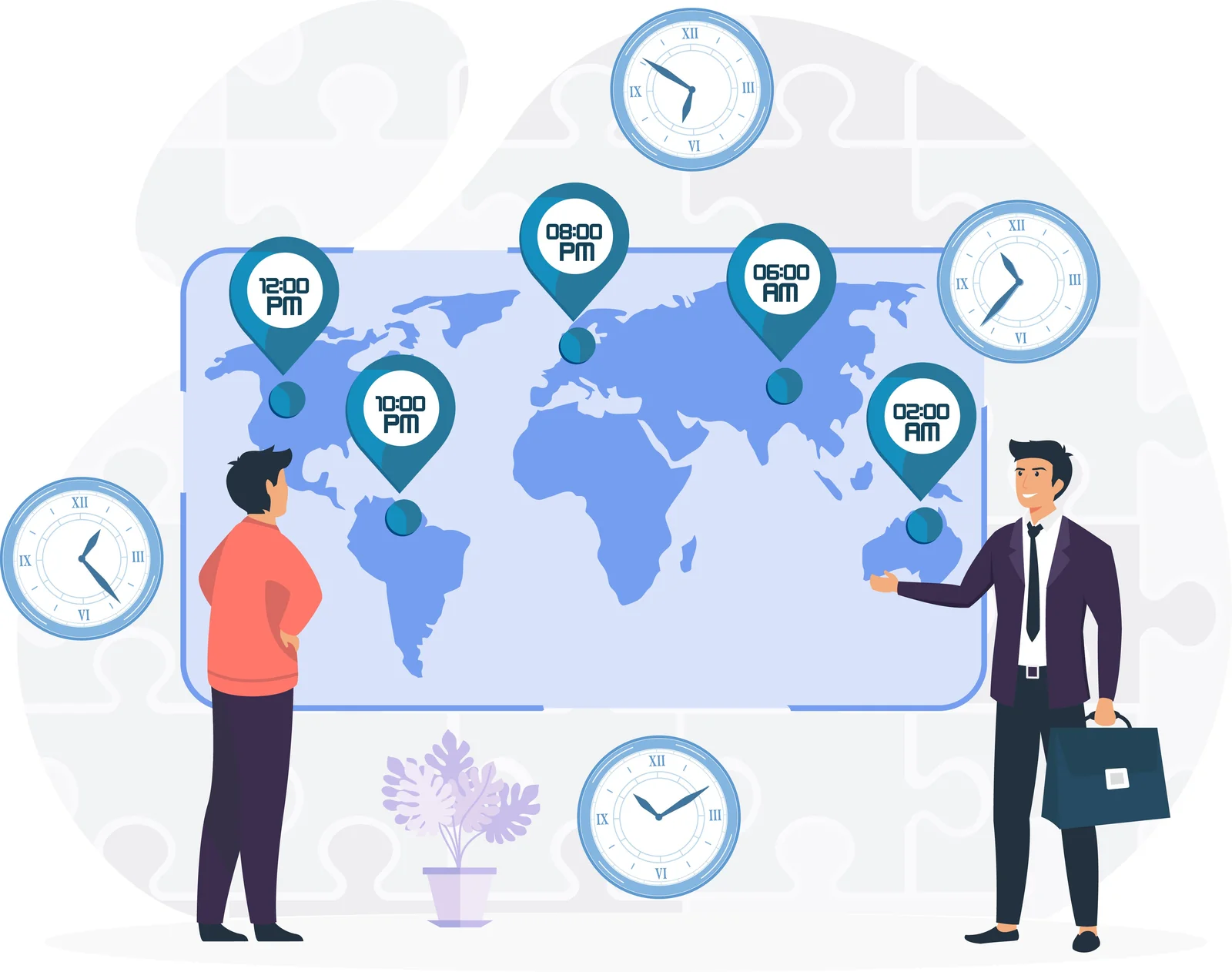
The time difference is often pitched as “we work while you sleep.”
Executives should translate that into what it really means:
-
Shorter feedback loops on bugs and enhancements
-
Overnight resolution for production issues
-
Faster QA and UAT iteration
-
Earlier visibility into delivery drift
The win isn’t a magic 24/7 factory. The win is cycle-time compression when communication cadence and ownership are managed well.
Security and IP: the concern is valid, and the answer is governance

Security fear is not paranoia. It’s due diligence.
If you’re considering outsourcing web application development to India, security comes down to controls and contract clarity. Not nationality.
What enterprise teams should insist on:
-
Clear data handling model (what data is accessible, where it lives, who can access it)
-
MFA and conditional access controls
-
Secure SDLC practices (SAST/DAST, dependency scanning, secrets management)
-
Logging and audit trails
-
IP ownership language that’s unambiguous
-
Exit plan: repo handover, documentation standards, access revocation
The India application development market in 2026: what’s driving demand
Let’s talk demand-side.
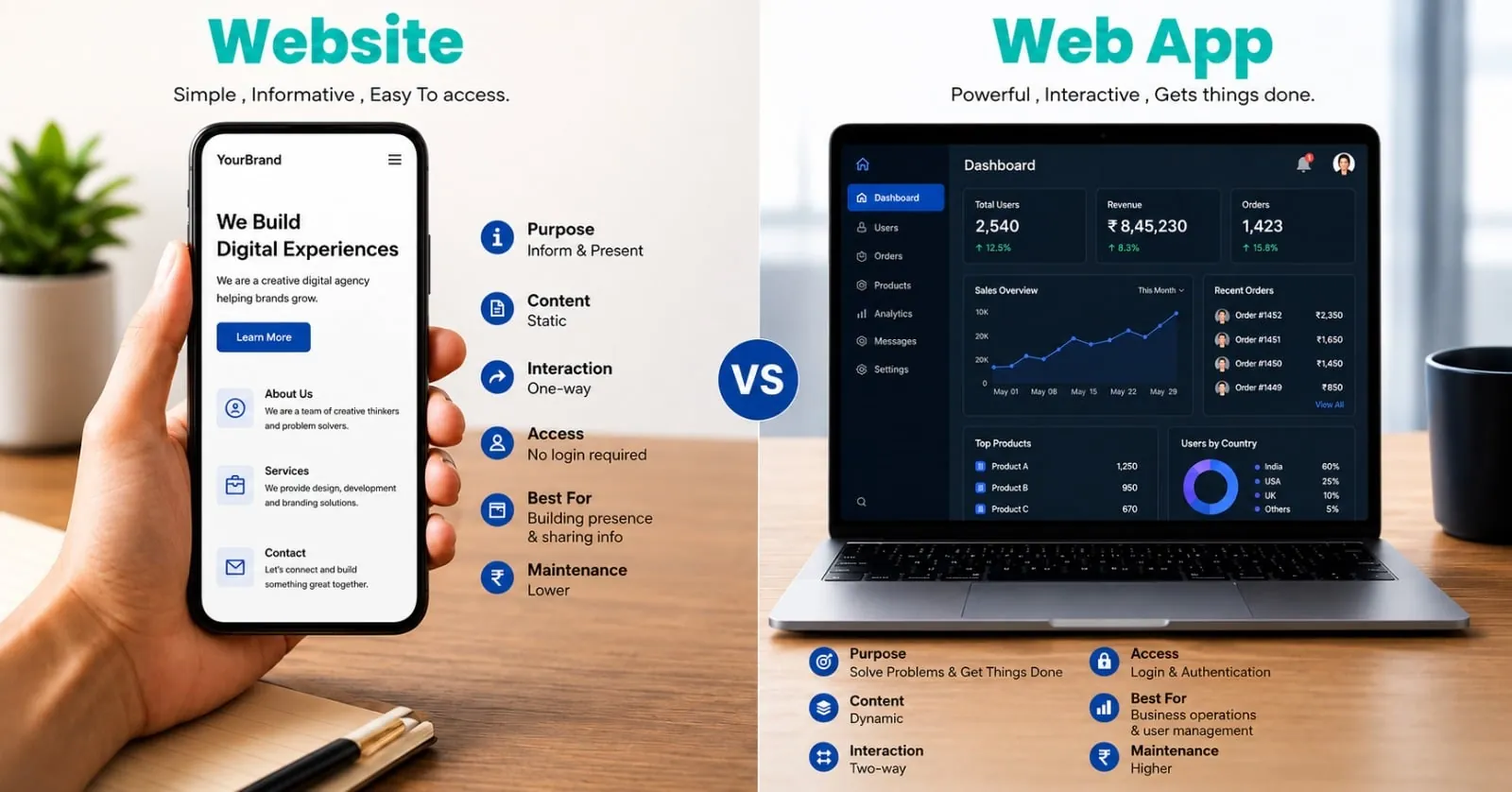
In 2026, enterprise web apps aren’t just “websites.” They’re core business systems:
-
Customer portals and B2B ordering
-
Internal operations tools
-
Partner ecosystems
-
Digital onboarding
-
Claims and case management
-
Analytics-driven dashboards
They often sit on top of cloud platforms, talk to ERPs, and require modern identity and access management. That’s why the india application development market is being pulled by three forces:
-
Digital public infrastructure (DPI) influence
India’s DPI-identity, payments, health systems-has trained the ecosystem to think at scale. Even policy strategy documents point to strong digital rails as a foundation. -
Urban and infrastructure pressure
World Bank commentary highlights the scale of investment needed for India’s urban growth, with major infrastructure and service delivery gaps.
Pressure creates demand for systems that improve service delivery, planning, and citizen experience. -
GCC and export engine maturity
As GCCs and export work move into higher-value engineering, the market standard rises.
“C application development in India” and legacy modernization: still a real slice of the pie
A lot of enterprise modernization still starts with systems written decades ago.
Legacy estates often include C/C++ services, batch processing jobs, and monoliths that still run mission-critical workflows.
Modern web app programs frequently need teams that can:
-
Understand legacy logic
-
Wrap it with APIs
-
Migrate modules without breaking core flows
-
Build a modern UI while the backend evolves
That blend-legacy fluency plus modern web engineering-is one reason enterprises keep India in the shortlist.

Major real world problems in India 2026 solvable by technology web apps
This is where the story gets more interesting for senior leaders, because it shifts from “outsourcing savings” to “product opportunity.”
Here are real problem spaces where web apps can move outcomes:
1) Urban mobility and congestion
Traffic isn’t just annoying; it drains hours and productivity. TomTom-index reporting shows Indian cities ranking among the world’s most congested, with major time lost annually.
Web applications here include: commuter experience systems, fleet optimization portals, enforcement dashboards, integrated incident reporting.
2) Digital health scale
India’s Ayushman Bharat Digital Mission progress updates cite massive ABHA creation and record linking at national scale.
Web apps here include: provider portals, appointment and referral coordination, health record access controls, claims workflows.
3) Urban infrastructure delivery and municipal services
World Bank analysis underscores the gap between required and actual urban infrastructure investment and capacity.
Web apps here include: project tracking dashboards, procurement transparency tools, grievance management systems, asset monitoring portals.
4) Skills and employability systems
The talent supply chain is huge, and it needs tooling-learning portals, assessment platforms, employer matching, credential verification.
5) MSME digitization and compliance
Many firms still struggle with onboarding, invoicing workflows, procurement, and compliance. A good web app removes friction and shortens cash cycles.
For global companies, these aren’t “India-only” problems. They’re testbeds. Solutions built for scale in India often transfer well to other high-growth markets.
A practical playbook for CIOs: how to outsource web app development to India without regret
If you want predictable outcomes, focus on structure.
Step 1: Decide your engagement model (before vendor selection)
-
Dedicated product squad (best for long-running products)
-
Build-Operate-Transfer (great when you want to internalize later)
-
Fixed-scope delivery (works only when scope is truly stable)
Step 2: Define what “done” means in engineering terms
Tie milestones to:
-
Performance targets (p95 latency, load thresholds)
-
Security checks (dependency scanning, secrets policies)
-
Reliability (SLOs, error budgets)
-
Documentation completeness
Step 3: Put governance on a calendar
Weekly steering reviews for:
-
Delivery forecast vs actual
-
Risk log
-
Product decisions and trade-offs
-
Quality metrics
Step 4: Validate the team, not the pitch deck
Ask to meet:
-
The architect
-
The engineering manager
-
The QA automation lead
-
The DevOps/SRE owner
If those roles are missing, the risk rises.
Step 5: Protect IP and reduce dependency
-
Repositories in your org
-
Shared documentation standards
-
Clear handover procedures
-
Cross-training sessions
This keeps partnership healthy and prevents single-vendor lock-in.
Where Deuex Solutions fits: web applications built for growth, not just launch day
When executive teams ask for a web app, they rarely mean “a web app.”
They mean a system that can handle adoption spikes, survive feature expansion, plug into existing enterprise tools, and stay maintainable.
What to take to the board in 2026
If you need one board-ready statement, it’s this:
Web application development in India is no longer a cost play; it’s a capability play-if governance, security, and ownership are built into the engagement.
India’s export scale, developer growth signals, GCC maturation, and modern engineering trends are converging.
For CIOs and CTOs, the win is predictable delivery with controlled risk.
For CXOs and Digital Transformation Directors, the win is speed and scope without ballooning internal overhead.
Related reading


Sanket Shah
CEO & Founder
I am Sanket Shah, founder and CEO of Deuex Solutions, where I focus on building scalable web mobile and data driven software products with a background in software development. I enjoy turning ideas into reliable digital solutions and working with teams to solve real world problems through technology.