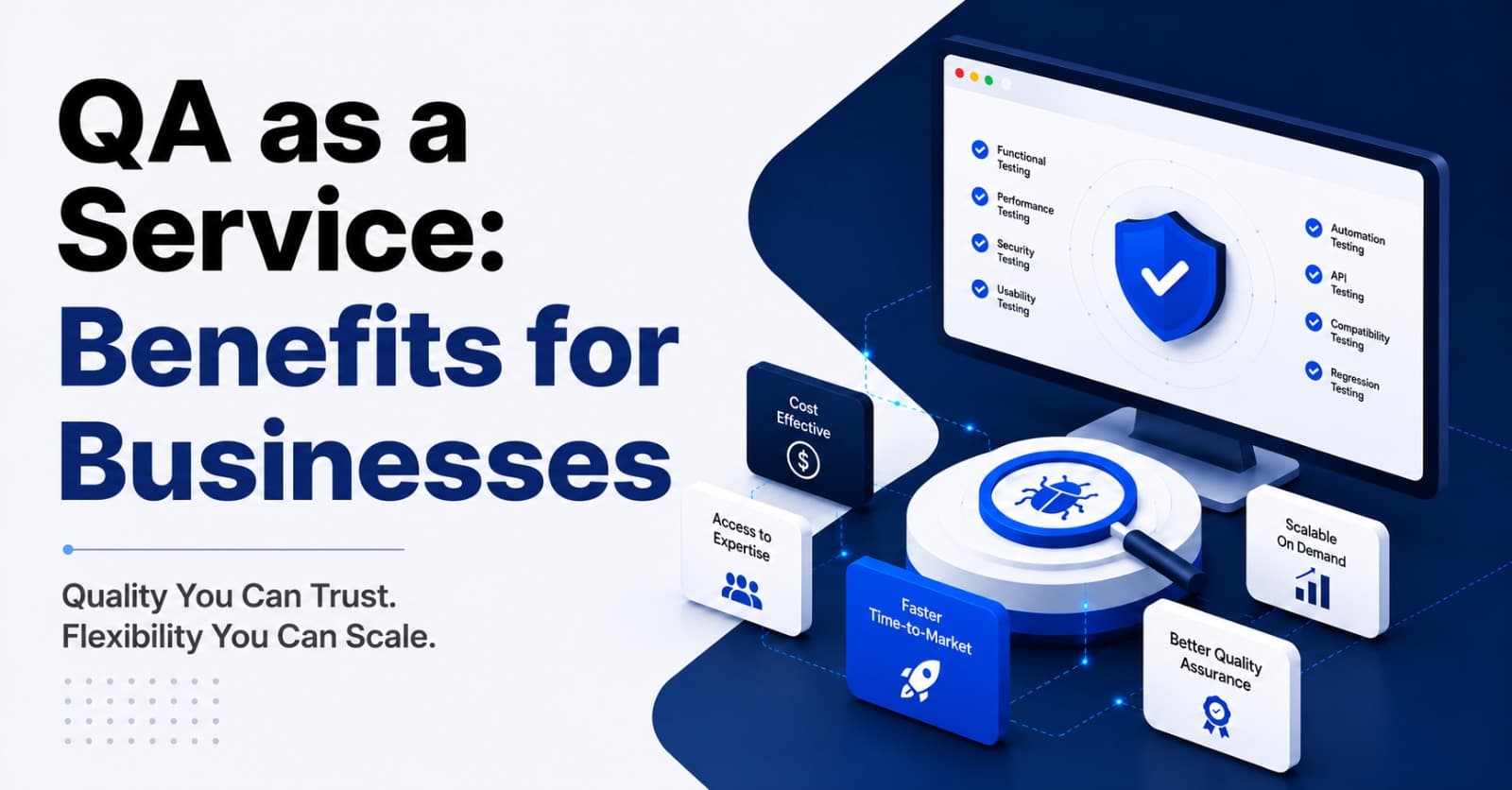
Quick Summary / Key Takeaways
Growing teams need a quality process that scales with product risk and release frequency. Our software testing services combine planning, hands on testing and automation around those priorities.
-
Software testing services help you catch bugs before users do.
-
They improve product quality, reduce rework, support faster releases, and protect revenue.
-
The right testing approach depends on your product, release cycle, tech stack, and business risk.
-
Manual testing and automation both matter. The best results usually come from using both in the right places.
-
Good testing is not just about finding bugs. It is about making every release safer.
-
If you skip testing, the cost rarely stays small. A long cited NIST study estimated that inadequate software testing infrastructure cost the U.S. economy about $59.5 billion annually, and it also noted that more than half of software bugs were found late in the process.
Software testing services are often treated like a last step before launch. That is usually where teams go wrong. Testing is not a box to tick at the end. It shapes how stable your product feels, how confident your team becomes, and how often you can release without panic.
If you have ever pushed a feature live and then waited for support tickets to start rolling in, this guide is for you.
Why software testing services matter more than most teams expect
You can build a beautiful app, a feature rich SaaS platform, or a clean ecommerce product. If it breaks under normal use, none of that helps.
That sounds obvious. Yet many teams still treat testing as a delay instead of protection.
In our experience, most businesses come to testing after one of these moments:
-
A release breaks a working feature
-
Customers complain about bugs that internal teams missed
-
The product grows faster than the QA process
-
Developers spend too much time fixing avoidable issues
-
Leadership wants faster releases but fears production failures
That is usually the turning point.
The question stops being “Do we need testing?” and becomes “How do we stop firefighting every sprint?”
That is where software testing services start paying for themselves.
What are software testing services

Software testing services are structured activities used to check whether an application works as expected, performs well under real conditions, stays secure, and delivers a smooth user experience.
That may sound broad. It is broad.
A real testing process can cover:
-
Functional testing
-
Manual testing
-
Automated testing
-
Performance testing
-
Security testing
-
Regression testing
-
Compatibility testing
-
API testing
-
Mobile app testing
-
Usability testing
The purpose is simple. Find issues early. Fix them before they become expensive.
When we worked with a client launching a B2B platform, the biggest issue was not a major crash. It was a set of small errors in user flows. Forms failed in one browser. Email triggers broke on certain inputs. Reports loaded slowly when filters stacked up. None of those looked dramatic in isolation. Together, they made the product feel unreliable.
That happens more often than people think.
What software testing services actually protect
A lot more than code.
They protect:
This is where many founders change their view. Testing is not overhead. It supports business stability.
Types of software testing services you should know
Not every project needs the same test plan. A startup MVP should not be tested exactly like a banking app or a healthcare system.
Still, most testing work falls into a few clear buckets.
1. Functional testing
This checks whether the product behaves the way it should.
Examples:
-
Does the signup flow work?
-
Can a user reset a password?
-
Does the shopping cart update correctly?
-
Does the report export the right data?
This is the backbone of QA.
2. Regression testing
Regression testing checks whether new changes broke something old.
This is one of the most overlooked areas. Teams add a feature, verify that feature, and then forget to check surrounding flows.
We noticed that once products reach a certain level of complexity, regression issues start showing up everywhere. Not because developers are careless. Because software is connected in messy ways.
3. Automation testing
Automation testing uses scripts and tools to run repeatable tests quickly.
Best for:
-
Stable features
-
Repeated flows
-
Frequent releases
-
Large regression suites
It saves time, but only when chosen carefully.
4. Performance testing
This checks speed, response time, and system behavior under load.
Questions it answers:
-
Can your app handle traffic spikes?
-
What happens when hundreds or thousands of users log in together?
-
Does the API slow down under pressure?
Performance issues often stay hidden until growth exposes them.
5. Security testing

This looks for weaknesses that attackers or bad actors could exploit.
It can include:
-
Authentication checks
-
Session handling reviews
-
Input validation
-
Access control testing
-
Vulnerability scanning
If your product handles payments, customer data, or private business records, security testing is not optional.
6. API testing
Modern software runs on APIs. If the API fails, the app fails, even if the interface looks fine.
API testing checks:
-
Endpoints
-
Response times
-
Data accuracy
-
Status codes
-
Authentication
-
Error handling
7. Mobile app testing
Mobile products add another layer of difficulty.
You need to account for:
-
Device variation
-
Screen sizes
-
Operating systems
-
Network conditions
-
Battery behavior
-
App interruptions
That is why mobile testing deserves its own plan.
Manual testing vs automation testing
This is one of the first things clients ask.
Which is better?
The honest answer is neither, on its own.
The best testing strategy usually blends both.
Manual testing is great when you want to think like a user. Automation is great when you want speed and repeatability. Trying to force one to do the whole job usually leads to weak coverage.
In our experience, teams get the best results when they automate stable, repeated flows and keep manual testing for exploration, edge cases, and user experience.
When do you need software testing services
Some businesses think they only need testing before launch.
That is too late.
You should think about software testing services when:
-
You are building a new product
-
You release often
-
Your team is growing
-
Customers report recurring bugs
-
You are moving from manual QA to structured QA
-
You are adding automation
-
You are scaling user traffic
-
You work in a regulated industry
-
You want to reduce release anxiety
A useful way to frame it is this:
The more your product matters to users, the more testing matters to your business.
Common testing models businesses choose
There is no single setup that fits everyone.
In house QA team
Good for companies with large product teams and steady release cycles.
Pros
-
Deep product familiarity
-
Faster internal communication
Cons
-
Hiring takes time
-
Coverage may stay limited if the team is small
Outsourced software testing services
Good for companies that need specialized support, faster ramp up, or flexible coverage.
Pros
-
Access to wider skill sets
-
Faster setup
-
Lower hiring burden
-
Easier to scale effort up or down
Cons
-
Requires a good onboarding process
-
Needs clear communication
Hybrid model
A lot of growing teams land here.
Internal product owners and developers stay close to product goals. External testing teams support coverage, automation, performance testing, or release readiness.
When we worked with a fast moving SaaS client, this hybrid model worked best. Their internal team knew the product deeply. Our role was to bring structure, repeatable QA flows, and broader coverage before major releases. That gave them speed without giving up control.
What a strong testing process looks like
A proper testing setup is not random bug checking. It follows a rhythm.
Here is a simple version of a healthy QA cycle:
This structure matters because bugs are not the only problem. Missed assumptions are just as dangerous.
We have seen teams write solid code against weak requirements. Testing catches that too.
Benefits of software testing services for growing businesses

Let’s make this practical.
1. Fewer production issues
No team catches everything. But a strong QA process cuts down the number of issues that reach users.
2. Faster releases over time
People assume testing slows things down. Poor testing slows things down. Better testing actually clears the path for smoother releases.
3. Better user retention
Users may forgive one bug. They rarely forgive a pattern.
4. Lower rework cost
Late defects cost more. That is not just industry advice. NIST’s economic assessment highlighted that delayed bug discovery creates major downstream costs and estimated huge economy wide losses from inadequate testing infrastructure.
5. More confident product teams
Confidence changes the tone of a release cycle. Teams stop guessing. They start shipping with proof.
What industries gain the most from software testing services
Almost every software business needs testing. Still, some sectors feel the impact harder.
Ecommerce
A payment issue or cart bug can kill conversions fast.
SaaS
Frequent releases create regression risk.
Healthcare
Patient data, compliance, and accuracy make quality non negotiable.
Fintech
Trust is fragile. A small defect can become a major business problem.
Logistics and operations platforms
Workflow errors can interrupt real world movement, stock, or reporting.
Education products
Bugs during live classes, tests, or progress tracking hurt both learners and institutions.
How to choose the right software testing services partner
This part matters more than many people expect.
You are not just hiring someone to click through screens. You are trusting a team to protect your product.
Look for a partner who can answer these questions clearly:
-
Do they understand your product type?
-
Can they explain their testing approach in plain language?
-
Do they offer both manual and automation support?
-
How do they report bugs?
-
How do they prioritize severity?
-
Can they work with your release cycle?
-
Do they understand performance and security needs too?
A testing partner should make your process calmer, not noisier.
In our experience, the best QA partnerships start with curiosity. Good testers ask sharp questions early. They want to understand the logic behind the product, not just the interface.
That is usually a very good sign.
Red flags that your current testing process is weak
If any of these sound familiar, your QA setup probably needs work.
-
Bugs repeat across releases
-
Developers test their own work without independent review
-
Regression testing is done only when there is time
-
Test cases live in scattered documents
-
Release signoff feels rushed
-
Production issues are treated as normal
-
No one knows actual test coverage
-
Automation exists but is rarely trusted
This is where many teams get stuck. They have bits of QA. They do not have a real testing system.
How much do software testing services cost
Pricing depends on scope, product complexity, release frequency, and the kind of testing you need.
A rough view looks like this:
The mistake is looking only at the immediate testing cost.
The better question is this:
What does a failed release cost your business?
Once founders look at lost sales, emergency fixes, support pressure, and reputation damage, testing starts to look very reasonable.
A practical approach for businesses starting now

If you are not ready for a huge QA setup, start small but start well.
A simple first step plan
-
Identify your most important user flows
-
Document expected behavior
-
Add structured manual testing
-
Track defects in one system
-
Build regression coverage
-
Automate stable, repeated flows
-
Review production issues monthly
That alone can change release quality fast.
We often tell clients not to chase a giant testing framework on day one. Start with the flows that matter most. Payments. Login. Core reports. Key user actions. Build trust there first.
Then expand
Why this matters more as your product grows
Early stage products can survive a few rough edges.
Growing products cannot.
The more users you serve, the harder it gets to recover from broken releases, silent failures, and messy workflows. A tiny defect in a small app is annoying. The same defect in a product with thousands of users becomes a business issue.
That is why software testing services should not sit at the edge of product strategy. They should sit closer to the center.
Good testing gives you room to grow.
It helps your team move with less fear. It helps users trust what you build. It helps your business avoid avoidable damage.
That is not extra process. That is good business.
Ready to make your product releases safer
If your team is shipping often, fixing the same issues again and again, or struggling to build confidence before launch, now is the right time to put a stronger QA process in place.
At Deuex Solutions, we help businesses plan, execute, and improve software testing services that match real product needs. That includes manual testing, automation support, regression strategy, performance checks, and release focused QA that fits your workflow.
Want a clearer testing roadmap for your product? Contact Deuex Solutions and let’s review your current QA process, spot the weak points, and build a testing approach that supports growth.
Related reading


Sanket Shah
CEO & Founder
I am Sanket Shah, founder and CEO of Deuex Solutions, where I focus on building scalable web mobile and data driven software products with a background in software development. I enjoy turning ideas into reliable digital solutions and working with teams to solve real world problems through technology.