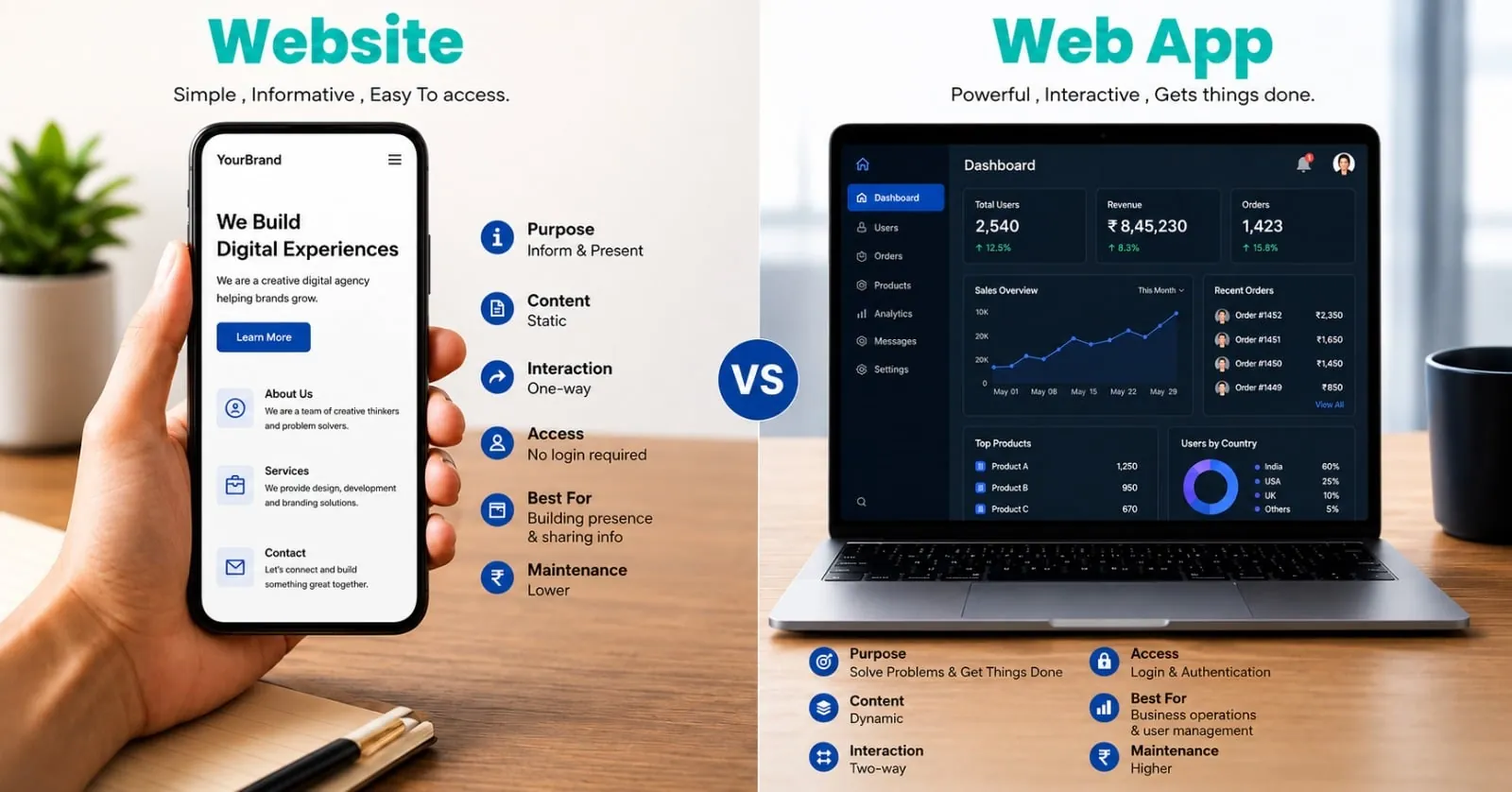
In today’s digital-first world, growth-oriented companies must deliver seamless, scalable, and secure experiences to remain competitive. Off-the-shelf software can certainly help you get started, but it rarely fits perfectly. As businesses evolve, their workflows become more complex, their customer expectations rise, and their need for unique digital capabilities becomes undeniable.
If your team needs implementation support in this area, explore Deuex Solutions' web application development services for planning, delivery, testing, and ongoing improvement.
This is where custom web application development becomes a transformational advantage-one that helps organizations innovate faster, operate smarter, and build long-lasting digital ecosystems.
Custom-built web apps not only align with your business goals, but they also adapt to future changes, reinforce security, and eliminate unnecessary features that slow teams down. In this complete guide for growing businesses, we explore what custom web applications are, why they matter, the development process, strategic benefits, must-have features, and how to choose the right development partner.
What Is Custom Web Application Development?
Custom web application development is the process of designing, building, and deploying web-based software tailored specifically to a company’s unique needs, workflows, and goals. Unlike pre-packaged solutions, custom web apps offer deep personalization, integration flexibility, enhanced performance, and full control over features.
A custom web application may support a wide range of use cases, such as:
- CRM and customer portals
- Inventory and supply-chain systems
- Fintech and banking platforms
- Ecommerce operations
- SaaS applications
- Data analytics dashboards
- AI-driven workflow automation
- Healthcare and ERP solutions
Where off-the-shelf tools fall short, custom web app development ensures that every function, interface, and workflow is engineered to serve your organization’s exact needs.
Why Growing Businesses Are Investing in Custom Web App Development
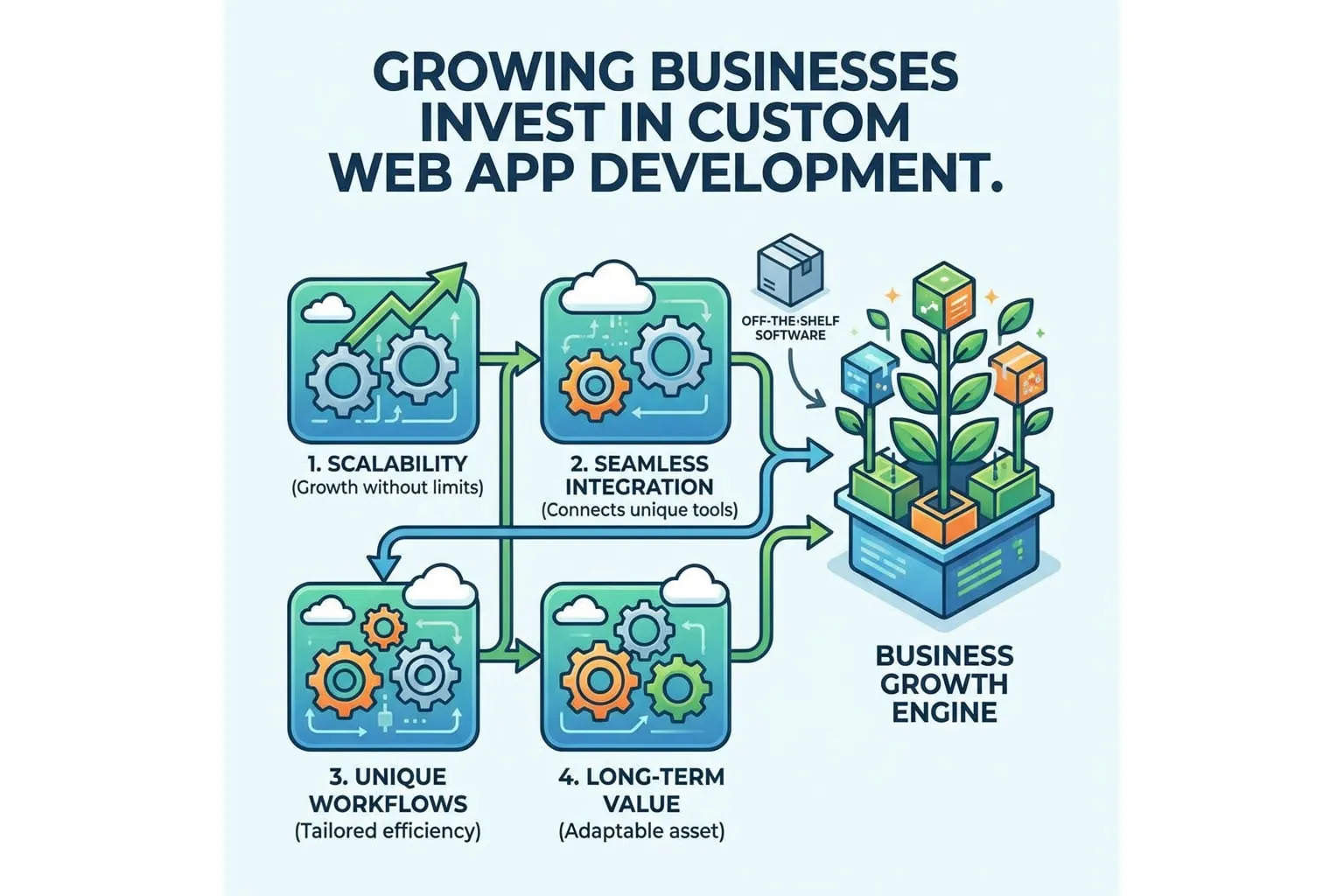
Rapidly scaling companies face increasing pressure to optimize processes, reduce operational complexity, and deliver superior user experiences. Custom web application development is becoming a strategic investment for several reasons:
1. Precise Alignment With Business Workflows
Every organization operates differently. Custom web apps capture these processes, automate repetitive tasks, and streamline operations with precision.
2. Scalability Designed for Growth
Unlike rigid platforms, custom apps expand effortlessly as your business grows-whether you add more users, features, or integrations.
3. Enhanced Security and Compliance
Custom applications allow businesses to implement advanced security measures, data encryption techniques, and compliance frameworks such as GDPR, HIPAA, or PCI DSS.
4. Superior Performance
Tailored web apps are optimized for your specific use case, resulting in faster load times, smoother workflows, and improved reliability.
5. Seamless Integration With Existing Systems
A bespoke web application development approach ensures your app connects flawlessly with CRMs, ERPs, payment gateways, analytics tools, and third-party software.
6. Cost Efficiency Over Time
Though custom apps require upfront investment, they reduce long-term expenses caused by licensing fees, performance limitations, or constant customization of generic tools.
Custom Web Application Development vs. Off-the-Shelf Software
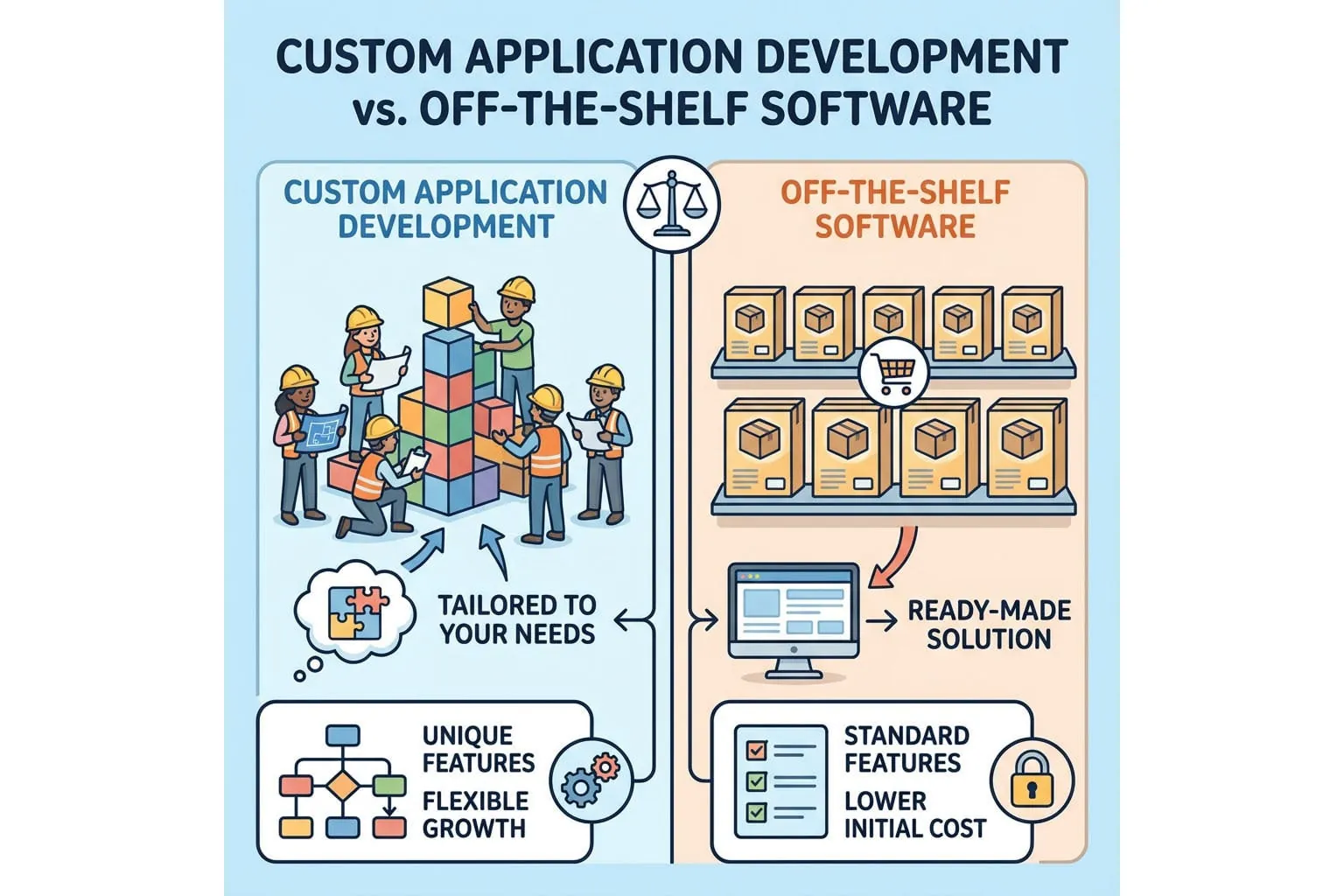
Growing businesses often wrestle with the choice between tailored web solutions and pre-built alternatives. While off-the-shelf products may offer quick deployment and low initial cost, they come with trade-offs.
For companies seeking long-term digital independence and competitive advantage, custom solutions deliver far greater value.
Types of Custom Web Applications for Growing Businesses
As organizations expand, their digital needs diversify. Below are some of the most common types of custom web applications used across industries:
1. Enterprise Web Applications
ERP, CRM, HRM, and supply-chain systems built specifically for enterprise-level workflows.
2. Customer Portals
Self-service hubs that streamline customer interactions, support, and personalized experiences.
3. SaaS Platforms
Cloud-based applications designed for recurring revenue models and multi-tenant architecture.
4. Ecommerce and Marketplace Solutions
Feature-rich digital storefronts, vendor dashboards, and payment integrations.
5. Data Visualization & Analytics Dashboards
Custom BI tools that convert raw data into actionable insights.
6. AI-Powered Web Applications
Predictive analytics, chatbots, automation engines, and machine-learning-driven tools.
The Complete Custom Web Application Development Process
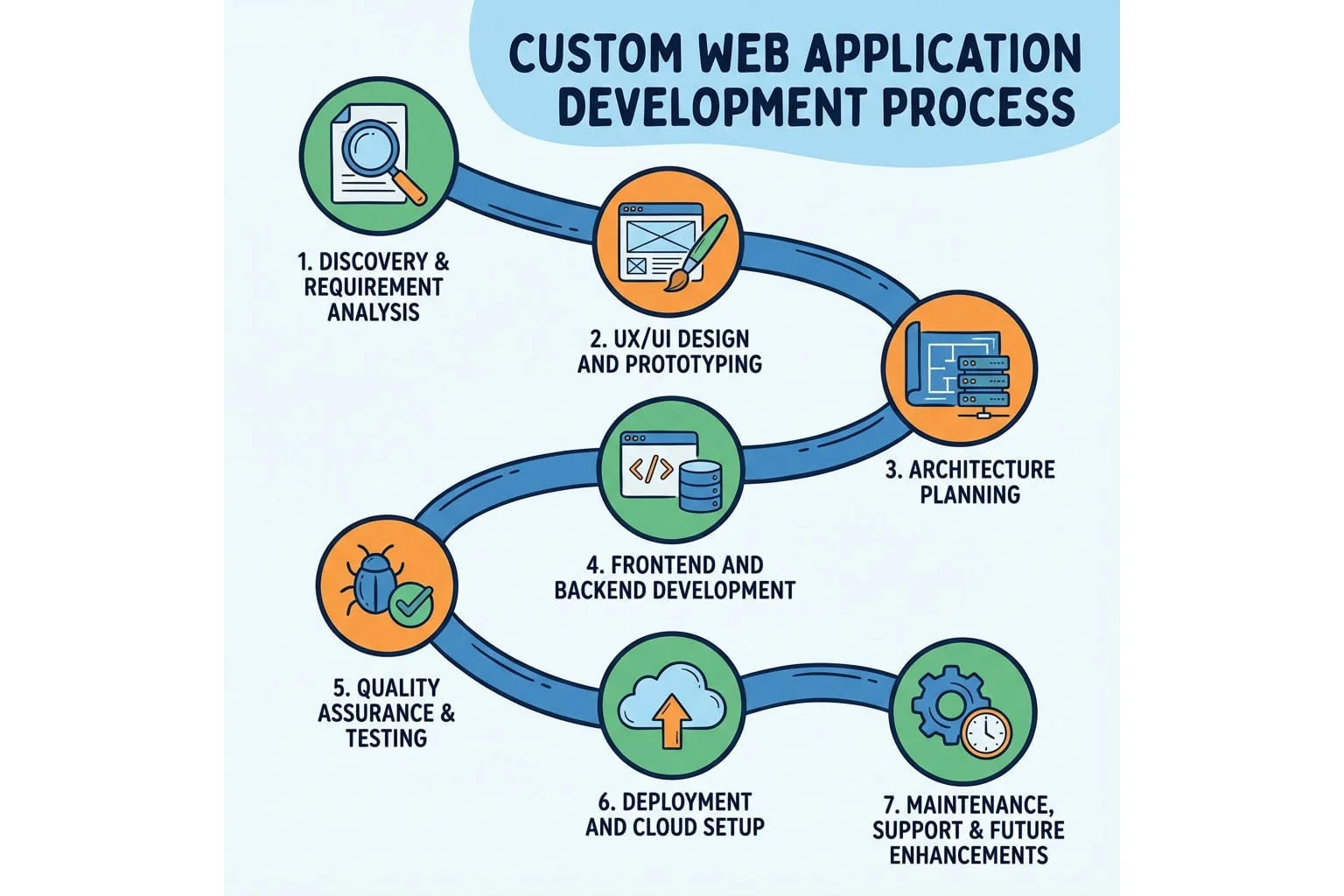
Building a custom web application requires strategic planning, technical expertise, and cross-functional collaboration. Below is a breakdown of the end-to-end process used by leading development teams.
1. Discovery & Requirement Analysis
This stage sets the foundation. It involves:
- Identifying business goals
- Understanding user needs
- Analyzing existing workflows
- Clarifying technical requirements
- Conducting competitor research
The objective is to define the scope, features, and measurable success criteria.
2. UX/UI Design and Prototyping
A professional design phase ensures the app is intuitive, engaging, and aligned with your brand.
Key activities include:
- Wireframing
- User journey mapping
- High-fidelity UI mockups
- Interactive prototypes
Great design transforms complex functionality into effortless user experiences.
3. Architecture Planning
This step focuses on selecting the right:
- Frontend technologies (React, Angular, Vue)
- Backend frameworks (Node.js, .NET, Django, Laravel)
- Databases (PostgreSQL, MongoDB, MySQL)
- Cloud infrastructure (AWS, Azure, Google Cloud)
A well-structured architecture ensures scalability, performance, and long-term stability.
4. Frontend and Backend Development
Here, the actual coding begins.
Frontend Development
Focuses on the client-side interface, ensuring responsiveness, accessibility, and dynamic interactions.
Backend Development
Handles:
- Business logic
- Data processing
- Integrations
- Authentication
- APIs
- System performance
Together, they form a cohesive and reliable application.
5. Quality Assurance & Testing
Comprehensive testing eliminates risks and ensures flawless performance.
Different testing layers include:
- Functional testing
- Performance testing
- Security testing
- Usability testing
- Cross-browser and device testing
- API testing
This process ensures the custom web app is robust, secure, and ready for real-world use.
6. Deployment and Cloud Setup
After testing, the application is deployed on secure cloud infrastructure. DevOps practices ensure continuous integration, automated builds, and smooth releases.
7. Maintenance, Support & Future Enhancements
A custom web application grows with your business, requiring ongoing:
- Performance optimization
- Security updates
- Feature enhancements
- Bug fixes
- Scaling capabilities
This ensures long-term efficiency and competitive advantage.
Key Features to Include in Modern Custom Web Applications
A successful custom web app balances functionality, usability, and security. Growing businesses often prioritize features such as:
🔹 Role-Based Access Control (RBAC)
Keeps sensitive data protected while enabling efficient user management.
🔹 Real-Time Analytics
Empowers decision-makers with accurate, live insights.
🔹 Adaptive User Interfaces
Ensures consistency across mobile, desktop, and tablet.
🔹 Automation Workflows
Eliminates repetitive manual tasks and boosts productivity.
🔹 Advanced Security Protocols
Includes encryption, multi-factor authentication, WAF, and secure API gateways.
🔹 Seamless Integrations
Connects CRMs, ERPs, payment gateways, and third-party systems.
How Custom Web Application Development Drives Digital Growth
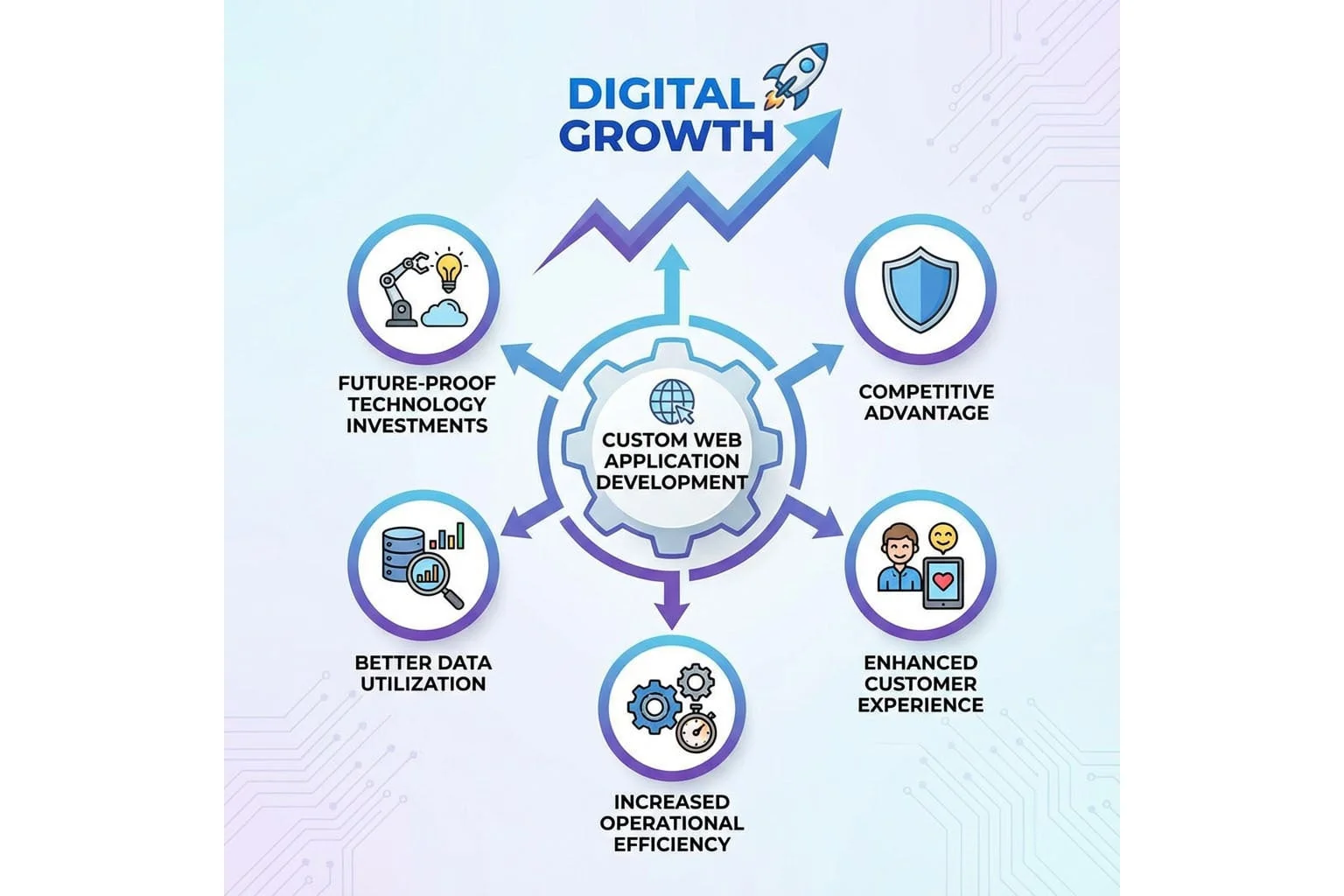
1. Competitive Advantage
Unique features give companies an edge that competitors cannot easily replicate.
2. Enhanced Customer Experience
Tailored interfaces, faster workflows, and personalized elements enhance user satisfaction.
3. Increased Operational Efficiency
Optimized workflows dramatically reduce delays and operational bottlenecks.
4. Better Data Utilization
Custom analytics systems centralize data and unlock actionable insights.
5. Future-Proof Technology Investments
Custom apps evolve with the business, allowing continuous innovation.
Costs Involved in Custom Web App Development
Several factors influence the cost of a custom web application:
- Project complexity
- Number of features
- Integrations required
- Security level
- Technology stack
- Development timeline
- Deployment infrastructure
- Maintenance and scaling needs
Most businesses consider custom development an investment, not an expense-one that pays off over time through efficiency and long-term ownership.
How to Choose the Right Custom Web Application Development Partner
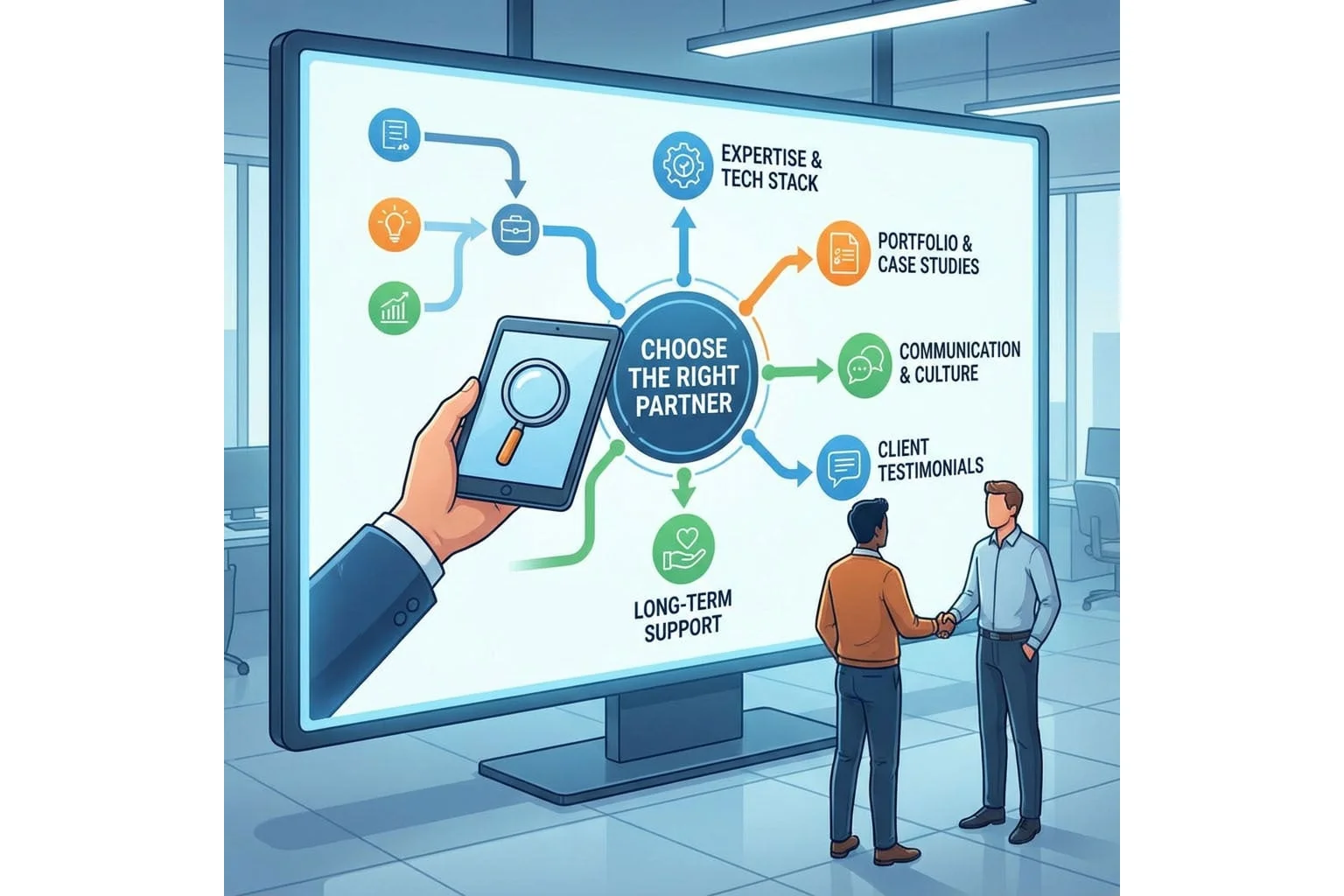
Selecting the right partner is crucial for success. Here’s what to evaluate:
1. Technical Expertise
Experience with modern frameworks, cloud technologies, and complex integrations.
2. Transparent Development Process
Clear communication, agile methodology, and milestone-based progress.
3. UI/UX Strength
Because design determines adoption, engagement, and satisfaction.
4. Security Capabilities
Your partner must follow industry-standard security protocols.
5. Proven Track Record
Case studies, client reviews, and portfolio depth matter significantly.
6. Post-Launch Support
A good development partner supports ongoing updates, scaling, and improvement.
Conclusion: Why Custom Web Application Development Is a Growth Catalyst
For businesses aiming to scale, innovate, and outperform competitors, custom web application development is no longer optional-it’s a strategic necessity. Tailored solutions enhance operational efficiency, improve customer engagement, strengthen security, and provide the flexibility companies need to adapt in a constantly shifting environment.
A professionally built custom web app becomes a long-term digital asset-one that grows alongside your business, accelerates transformation, and unlocks new revenue opportunities.
If you’re ready to elevate your digital journey, now is the perfect moment to invest in a solution designed exclusively for your business and built for the future.
Related reading
- Why Are More Companies Turning to India for Web App Development?
- Exploring Cross Site Scripting (XSS) Vulnerabilities
- Custom Web Application Development for Enterprises
Standards and Technical References
Use the OWASP Application Security Verification Standard to define security requirements, WCAG 2.2 to check accessibility, and MDN Web Docs for browser platform behaviour and implementation guidance.


Sanket Shah
CEO & Founder
I am Sanket Shah, founder and CEO of Deuex Solutions, where I focus on building scalable web mobile and data driven software products with a background in software development. I enjoy turning ideas into reliable digital solutions and working with teams to solve real world problems through technology.