IoT Software Development Services
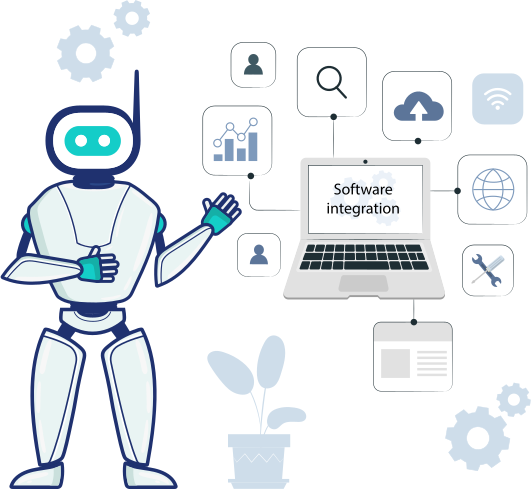
IoT projects look simple on a slide: connect the device, collect the data, show it on a dashboard. Real deployments are messier. Devices drop offline. Firmware changes. Sensor data arrives late. Field teams need answers before the next service window closes. Deuex Solutions builds IoT software development services for companies that need connected products, edge-to-cloud platforms, device dashboards, mobile control apps, and Agentic AI workflows that help teams notice problems sooner and act with control.
IoT Software Built for Devices, Data, Security, and Field Operations
The hard part of IoT is rarely one single feature. It is the chain: device identity, sensor capture, network behavior, message queues, cloud storage, APIs, dashboards, alerts, updates, and the people who must trust the system when something fails. We design that chain with practical guardrails. That means secure onboarding, clean telemetry models, role-based access, alert rules that do not drown the team, and enough visibility to know whether a problem lives in the device, the network, the cloud, or the workflow.
Our Services
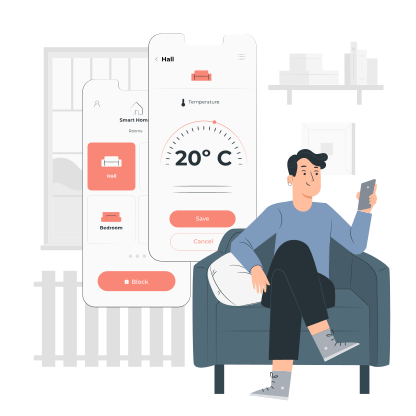
Custom IoT Platform Development
Build the software layer behind connected products: device registries, telemetry pipelines, cloud dashboards, APIs, user roles, reports, alerts, and admin controls. We plan the product around real devices, not just clean demo data.
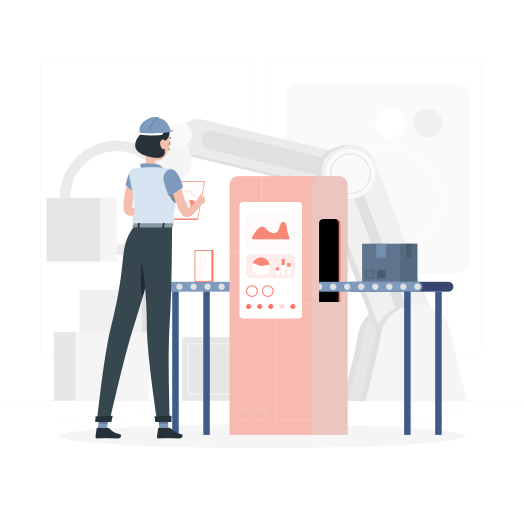
Edge, Embedded, and Mobile IoT Apps
Create edge applications, embedded software support, and mobile apps for monitoring, configuration, remote commands, and field service. The goal is practical control: a technician, operator, or customer should know what happened, what changed, and what to do next.
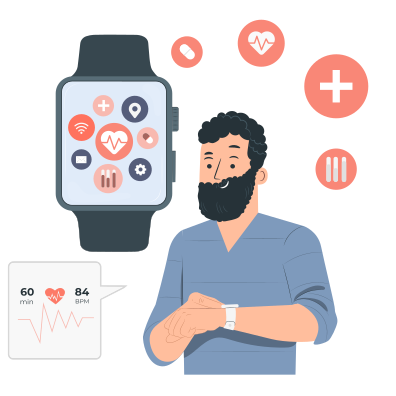
Device Data, Cloud, and System Connections
Connect devices to cloud services, enterprise systems, analytics tools, and third-party platforms through clean APIs and protocol choices such as MQTT or HTTPS. We shape data models so teams can use the information without spending months untangling it later.
Agentic AI for IoT Monitoring and Operations
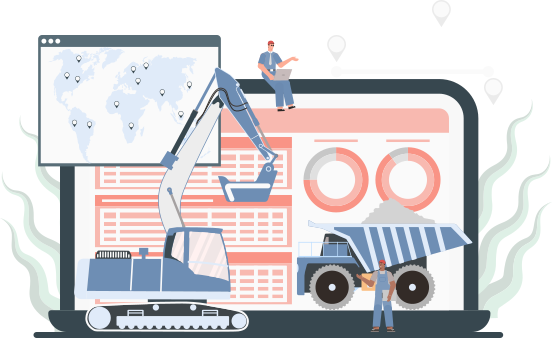
Use Agentic AI for high-value support tasks: anomaly triage, alert grouping, maintenance suggestions, knowledge search, incident summaries, and workflow routing. We keep humans in the approval path for actions that affect devices, customers, safety, or cost.
Why Choose Deuex Solutions?
We Think Beyond the Dashboard
A dashboard is only useful if the data behind it is trustworthy. We work through device identity, event naming, offline behavior, retry logic, alert noise, and admin controls before the interface becomes a pretty screen with weak signals.
Security Is Planned Early
Connected products can expose devices, accounts, locations, and operating data. We design for secure onboarding, protected APIs, authentication, access control, logging, OTA update paths, and safer defaults from the start.
We Build for Field Reality
IoT software has to survive weak networks, noisy sensor readings, battery limits, version drift, and users who are not sitting at a desk. We account for those rough edges while planning the architecture and release path.
AI With Guardrails, Not Guesswork
Agentic AI can help sort alerts and suggest next steps, but it should not quietly change a fleet without review. We design permission limits, audit trails, fallback paths, and escalation rules so AI supports operators instead of surprising them.
Our Approach
At Deuex Solutions, we follow a structured approach:
1

Discovery, Device Mapping, and Risk Review
We map the business case, device types, users, data flows, network conditions, security needs, AI use cases, and rollout limits. This gives leaders a grounded first-version scope.
2
Architecture, Data Model, and UX Planning
We define the device registry, message flow, cloud services, APIs, storage, dashboards, mobile screens, alert rules, admin roles, and AI boundaries before full development starts.
3
Secure Build, Testing, and Device Simulation
We build in short cycles, test data flows, simulate edge cases, check APIs, review access controls, and validate alert logic with realistic device behavior.
4
Launch, Monitoring, and Fleet Care
We support rollout, monitoring, bug fixes, data quality checks, OTA planning, dashboard updates, security patches, and product improvements as devices meet the real world.
Years of Experience

Long Term Clients
Projects Delivered
Open Source Contributions
Trusted By










Why Choose us as your Next Digital Partner?
We believe the best way to explain our work is to let our clients do it. Here's what some of them have said.




At Uber, we engaged Deuex Solutions for critical UI and platform work. From building intuitive interfaces for big data products to designing a workflow platform adopted by 2000+ internal users, the team consistently delivered with speed, quality, and a clear grasp of technical complexity. Deuex has proven to be a reliable partner for building world-class, user-focused engineering products.
5.0/5 Rating
Based on 7 Client Reviews
- Architect For Streaming, Uber Technologies Inc


Frequently Asked Questions
What is IoT software development?

What services does Deuex Solutions provide for IoT?
Can Deuex Solutions build IoT apps for mobile and web?
How do you handle IoT security?
Where can Agentic AI help in IoT software?
How do we start an IoT project with Deuex Solutions?
Build IoT Software Your Teams Can Trust in the Field
A connected product is judged after deployment, not during a polished demo. If you are planning an IoT platform, device dashboard, mobile control app, telemetry pipeline, or Agentic AI workflow for operations, Deuex Solutions can help you shape the first version, protect the risky parts, and build the tools your team will need once devices are live. Book a demo and let us map the device, the data, and the path to launch.